NIMBYism is back!
I thought Austin needed tax revenue?

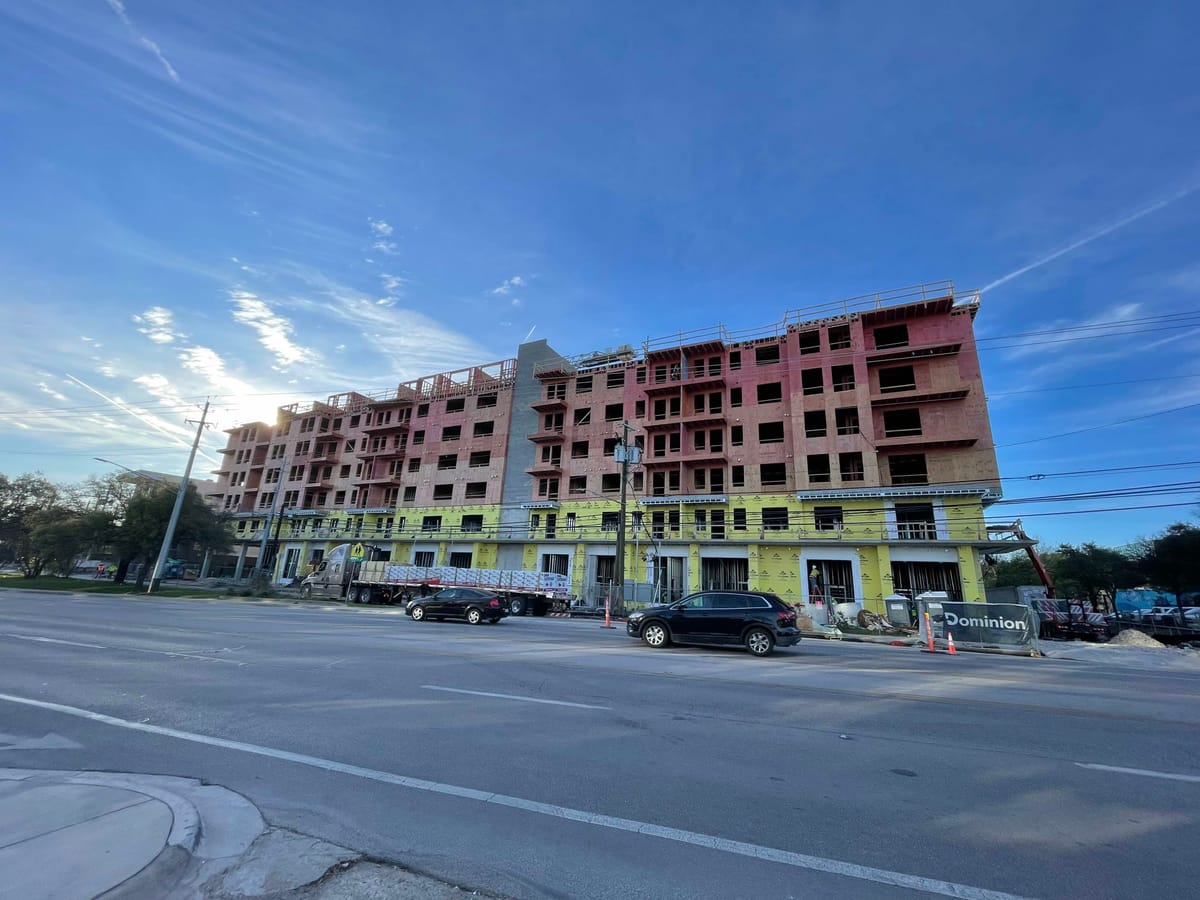
This may be my only newsletter this week. I'm spending the next few days wandering around Austin, trying to get a sense of how people feel about the city's direction.
Last week's City Council meeting was a real blast from the past. Austin's elected leaders set aside their professed commitment to housing affordability in deference to a single Council member. It was all very 2015.
Today's sponsor:

Curious if a condo regime is right for your property? I’ve completed 3,000+ condo projects across Texas and help owners and developers efficiently divide duplex, multifamily, and commercial properties for sale or financing. For more information visit Texas Condo Law or contact me at julie@texascondolaw.com.
Council voted unanimously against rezoning a large tract of land in Montopolis to facilitate an apartment building. What's particularly odd is that the rezoning, in addition to being recommended by staff, had won preliminary approval ("first reading") at the previous meeting on a 7-4 vote. But when it came up again for second reading last week, it was unanimously rejected.
What changed? What everyone tells me is that Council Member Jose Velasquez, in whose district the project was proposed, requested that his colleagues oppose it, and they granted his request.
This type of "ward privilege" is customary in many other cities – San Antonio, Chicago, Philadelphia, to name a few. When Austin switched to geographical Council districts in 2015, there were certainly some who wanted to instill that tradition, where individual Council members would police development in their districts in deference to their district's neighborhood associations.
Fortunately, that practice never took root, largely because the blossoming pro-housing movement made clear that no neighborhood should be exempt from helping to address Austin's housing supply crisis.
A few years of falling rents, however, has clearly diminished the sense of urgency around housing and has apparently made even YIMBY Council members receptive to housing obstruction.
It would be easier to forgive if the city weren't in the midst of a budget crisis that can only be addressed by either slashing services or INCREASING PROPERTY TAX REVENUE THROUGH NEW DEVELOPMENT.
The property in question is this vacant plot of land bounded by Montopolis Drive, Caddie St & Fairway St. It is less than a quarter mile from a planned Project Connect rail stop.
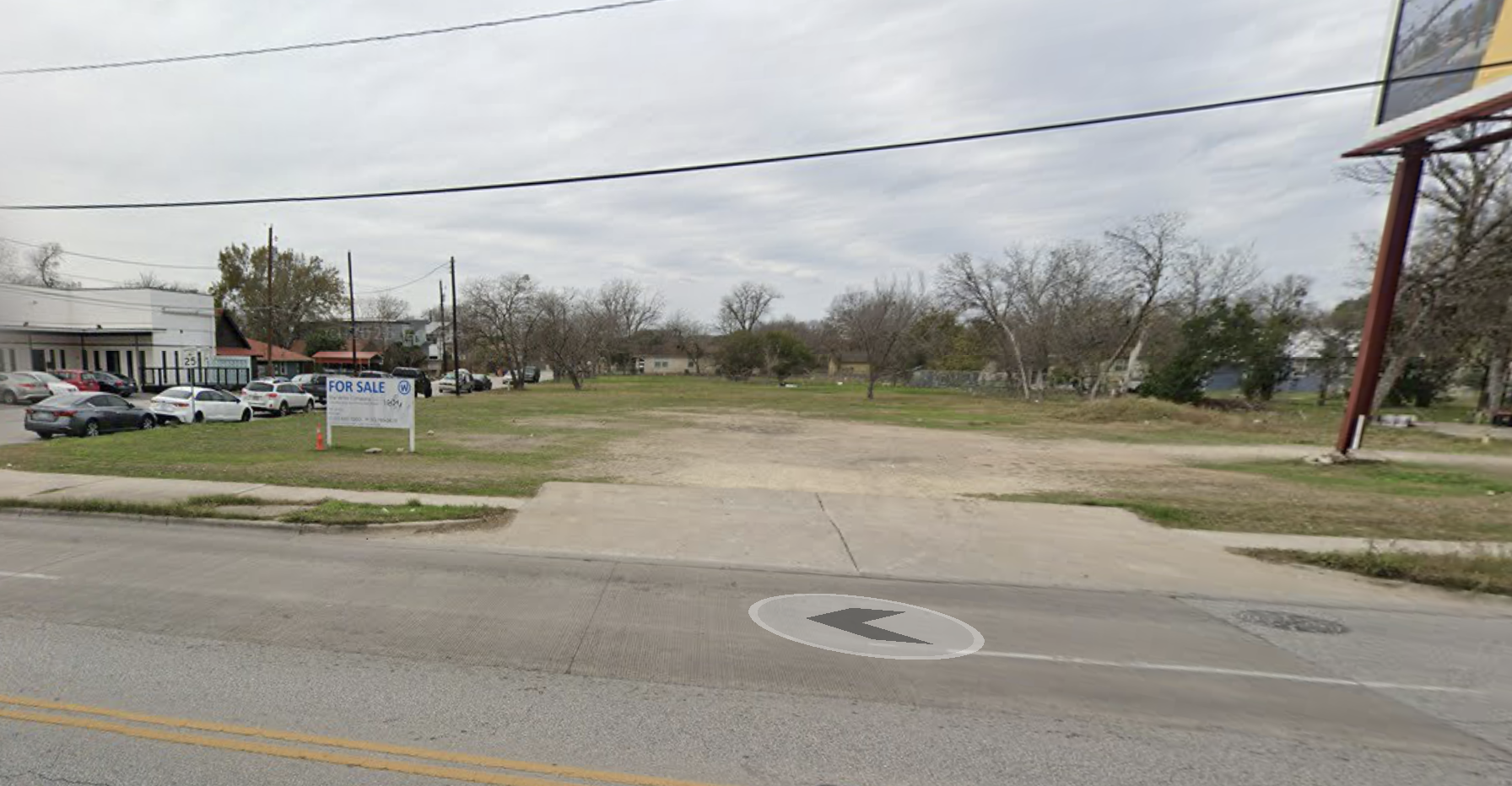
More housing on a corridor. More housing near transit. More tax revenue. More foot traffic for nearby small businesses. Improved sidewalks and probably some improved drainage. Everything City Council members say they want.
But Susana Almanza and Fred McGhee, the self-anointed guardians of Montopolis, don't like multifamily housing. And they especially don't like it when the group building it doesn't kiss their ring.
"I hope you didn't expect that you'd be able to come here for free," McGhee told developer Joshua Brunnsman during a Zoom meeting, a recording of which Brunnsman played at the Council meeting.
McGhee proposed a "community benefits agreement" requiring the developer build townhomes instead of apartments and laid out a number of financially infeasible demands, including that half of them be income-restricted and that all of them be certified as "Passive Houses" by the Passive House Institute in Darmstadt, Germany. (McGhee grew up in Germany and is a big fan of German design – you can see his lengthy pronouncements on the subject in this Reddit AMA he did as a Council candidate in 2014)
On top of that, McGhee proposed that Brunnsman pay $150,000 to his organization: the Montopolis Community Development Corporation.
Long-story short, it didn't work out. After two years of zoning bureaucracy, which included Brunsmann dialing back his initial plans to seek DB90 zoning, Brunsmann requested mixed-use zoning that would allow up to 180 apartment units. It would been required to reserve 10% of the units for those at 80% of the area median income, although in the current market all of the new units would likely be affordable to that income bracket. But perhaps not by the time the units would have become available.
Ironically, five years ago there was a proposed development involving Habitat for Humanity that would have been 50% income-restricted. McGhee and Almanza helped kill that too.
On Thursday McGhee and Almanza were joined by about two dozen people who spoke against the project. What was somewhat surprising is that about half of those who spoke were not from the neighborhood. They were allies from other parts of the city speaking against the alleged destruction the development would cause.
Curiously there was no mobilization of the city's YIMBY movement on behalf of the zoning. Some YIMBYs may have gotten complacent after the passage of HOME and other zoning reforms.
Nothing said by opponents was unfamiliar. There were complaints about the change to the neighborhood character, which makes sense. And then there were the baseless claims that building an apartment on a vacant lot will somehow result in the displacement of nearby single-family homeowners. I am sympathetic to those who actually believe this, but everybody on City Council knows better.
"Our green spaces, like our single-family zoning, are precious and limited," said Almanza.
What a funny comment. She is describing the vacant property, which many years ago was home to a church, as valuable both as "green space" and because it is zoned for single-family homes. The irony is that multifamily developments are more likely to result in truly public green space due to the city's parkland dedication requirements.
In his remarks to Council, Brunsmann said that what he didn't want to do with the property was turn it into homes "catering to people starting at $180,000," but that was the product that single-family zoning would yield.
There was no comment from the dais. Natasha Harper-Madison and Chito Vela asked to be recorded voting against the individual zoning change but in favor of the associated change to the Future Land Use Map. In other words, they were signaling support for multifamily housing on this site.
Unless another developer steps in, all that's going to built on that site is very expensive housing. That will produce less tax revenue.
Higher rents, higher taxes, fewer services.
Who is winning here?
Please tell your friends to get their OWN subscription to the Austin Politics Newsletter! And if you found this article particularly valuable, you can show your appreciation by buying me a cup of coffee to fuel further investigation and analysis of city politics.