One way streets, practical urbanism
What is practical in Austin?

I'm writing this from the Hershey Lodge in Hershey, Pa., where my wife is attending a conference and I'm attending to our child, who is on spring break. I'll be happy if I manage two articles this week.
On Thursday City Council approved the Austin Core Transportation Plan, a 120-page vision for mobility downtown.
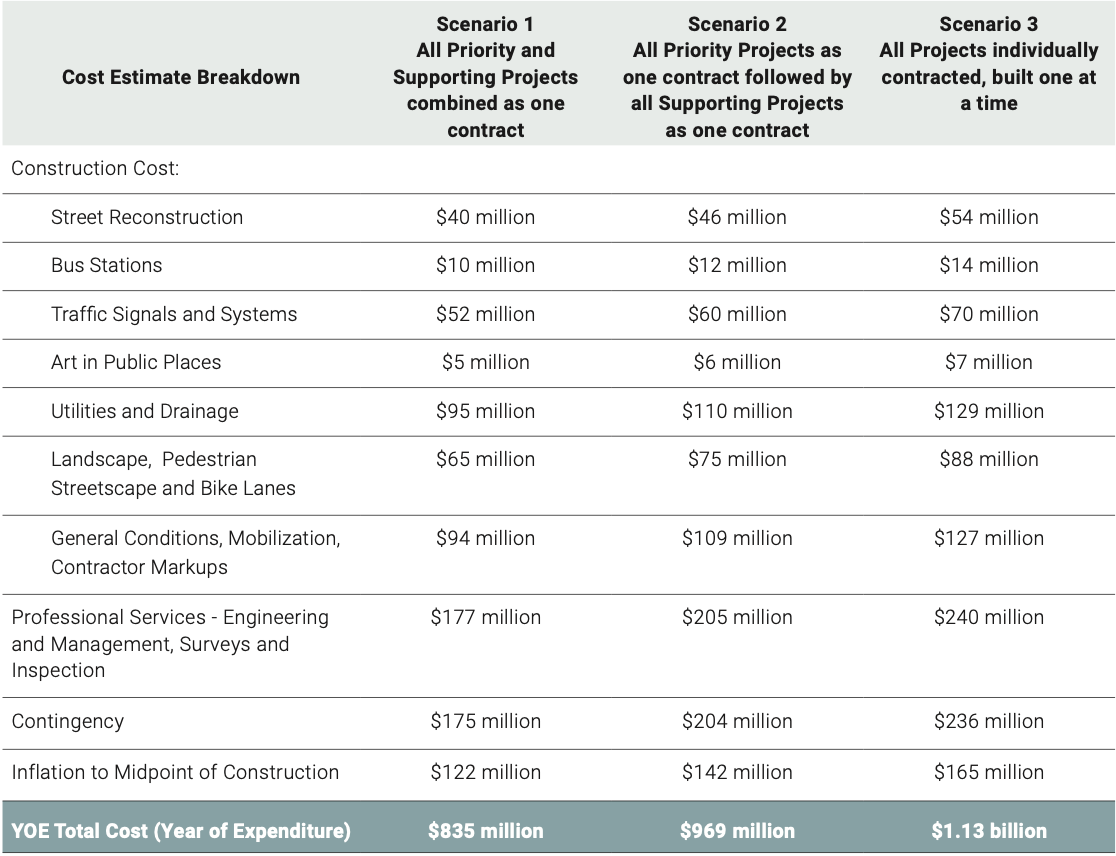
So, what does this mean? Probably not much unless and until money becomes available to fund the improvements, which are estimated to cost somewhere between $800 mil and $1.13 bil.
There's a chance that Council will put a transportation bond on the ballot this November, which could include some money for some of these projects. One can only hope that these projects go better than the 2016 bond projects that you're still waiting on.
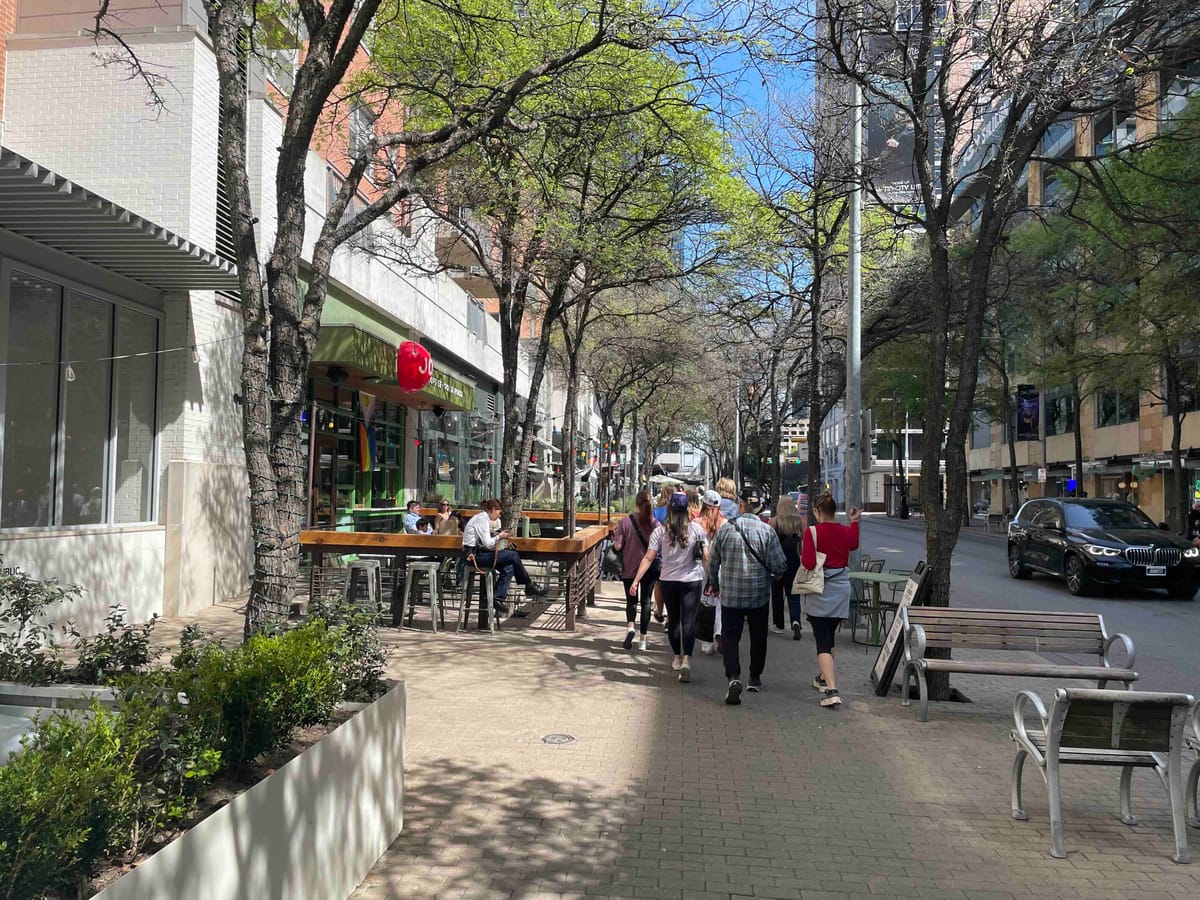
Setting funding aside, the plan's aspiration is to make downtown nicer and safer by reducing the amount of space allocated to cars. One part that has caught people's attention is a proposal to convert a number of one-way streets to two-way.
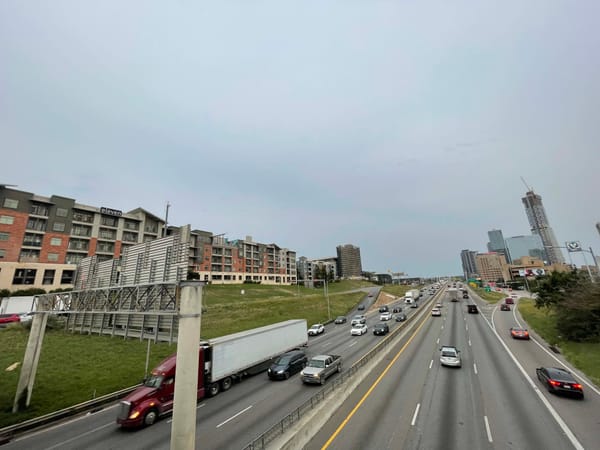
One-way streets became a thing in the mid-20th century for the stated purpose of moving vehicles faster through cities. The result has been a series of mini-highways bisecting what is supposed to be the city's cultural center.
The plan also envisions leaving 5th & 6th Streets and Trinity & San Jac as one-way streets, but with protected bike lanes and dedicates bus lanes. Again, less space for cars.
The plan was approved 10-1, with Marc Duchen casting the no vote. In a statement to the Statesman, he said it "may help Austinites who live downtown get around on electric scooters, but it makes it more difficult for everyone else to visit the area, particularly those community members whose neighborhoods are underserved by public transit."
Funny. He mentioned scooters but didn't mention all the bus riders who will now be moving faster through downtown. (Remember when I told you that people who argue that Austin should have done bus rapid transit instead of rail don't actually want bus rapid transit either?)
Some thoughts ...
Let's set aside bikes for a moment. How about walking? The form of transportation that has been with us since our ancestors emerged from the sea. It's something that 98% of the population does on a daily basis.
It seems to me that the government should have a very compelling reason to disrupt humans from engaging in this most fundamental of human behaviors. The compelling reason, according to post-WWII city planning was simple: car speed. If the primary purpose of streets is to convey cars as fast as possible, then four lane one-way streets in downtown Austin makes sense.
In recent years some have begun to question the wisdom of surrendering so much of the public right of way to enable high vehicle speed, a behavior that makes downtown less enjoyable for those walking, lounging, eating or otherwise existing outside of an automobile.
In Paris, the automobile has been largely banished from large swathes of the city and the city has almost overnight become a bike utopia. In New York, you now have to pay $9 just to enter into lower Manhattan in a car.
But what is possible in Paris and New York is not possible in most of America, including Austin. We can curse our forebears for leaving us with such a sorry state of affairs, but we cannot deny that the terms of the debate are very different.
So cars are part of the equation. But there's no reason to provide them a monopoly or near-monopoly on the public realm. Driving in a car may be a necessary form of existence, but it's not the goal of existence. If I have to choose between the safety and enjoyment of the people at a public park and enabling the passing cars to get to their destination ASAP, I'll always choose the former.
Some practical examples include the changes to Barton Springs Road, where four car lanes were reduced to two, enabling wide protected bike lanes. I know there are still some who aren't happy about it, but it certainly seems like the changes have gone over pretty well. City Council candidate David Weinberg, who once mocked the concept in the pages of the Austin Chronicle, now concedes it's worked out pretty well.
This is the model the city should be pursuing downtown. Cars will retain a very prominent place in our right-of-way, but not to the point of making everyone else miserable. Even Adam Greenfield, the proudly car-free leader of Safe Streets Austin, warns that pursuing some urbanist dreams too quickly can backfire. When we spoke on my podcast the other month, for instance, he said it was important for the city not to try to turn Congress Ave into a pedestrian mall until there is a certain amount of consistent foot traffic. (In other words, more retail/restaurant and less office)
I recall what a Ukrainian friend told me after a long walk along one of Austin's godforsaken corridors: "In this country, when you are walking, it's like you are outside of society."
That's not the way it should be.
Please tell your friends to get their OWN subscription to the Austin Politics Newsletter! And if you found this article particularly valuable, you can show your appreciation by buying me a cup of coffee to fuel further investigation and analysis of city politics.