The new homeless navigation center
A critical service that nobody wants to be near.

The city announced yesterday that it will begin soliciting bids from organizations to operate the new South Austin Housing Navigation Center. The city is offering $250,000 a year "to support operations and service delivery."
However, the city has not yet released the Request for Proposal, so it's not clear what the expectations are of the organization that wins the contract.
This week's sponsor:

Do you own a duplex or ADU in Austin? I can help you divide ownership for separate sale or financing of units in a quick, affordable process that doesn't involve the City. I've created condos on over 3,000 two-and three-unit properties in Austin, allowing owners to unlock equity and separately sell homes or sides of a duplex. Contact Julie Alexander (julie@texascondolaw.com) for more information!
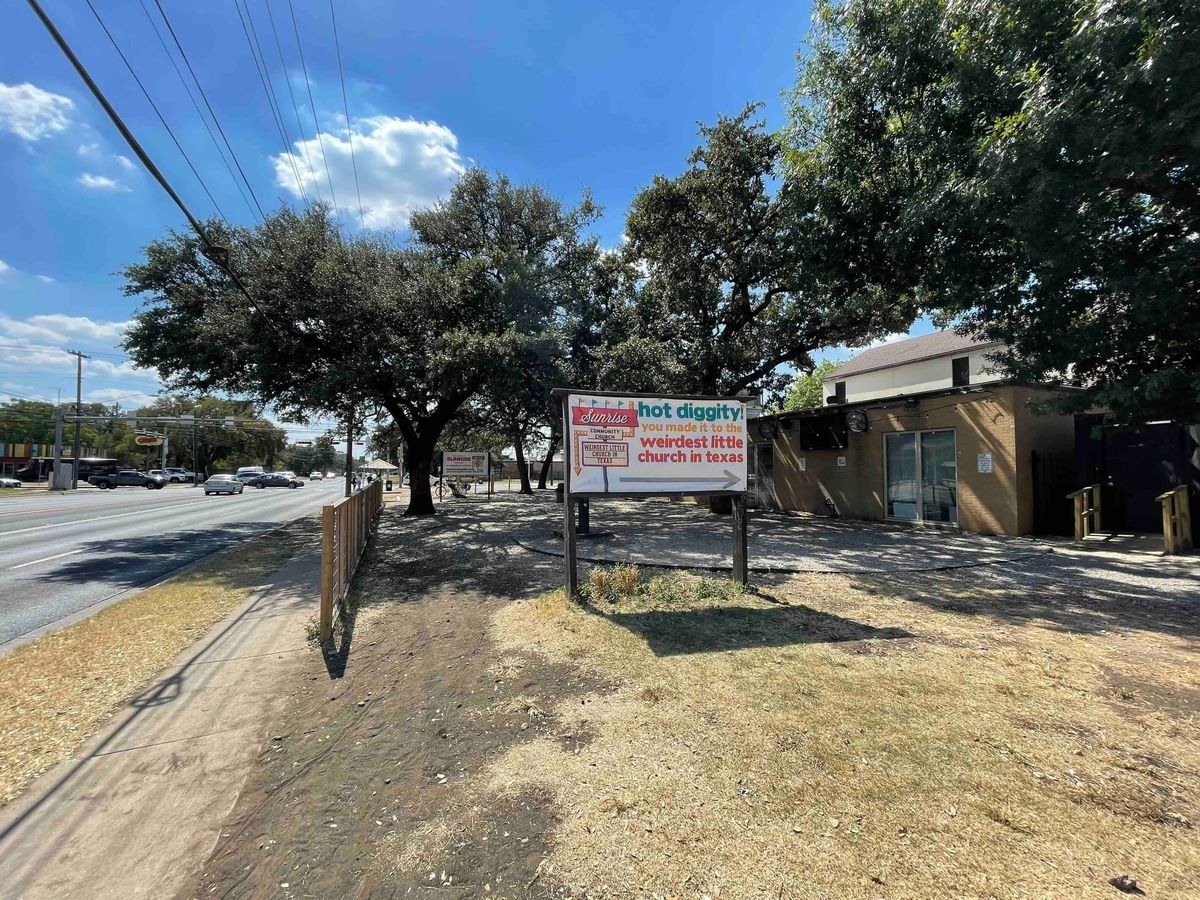
Although it may not be officially stated, the whole point of this new facility is be to the new home of the Sunrise Navigation Center, a key resource for homeless people that is deeply unpopular among its neighbors in the adjacent Southwood and Western Trails neighborhoods.
Frustration with the current facility, across the street from Joslin Elementary, prompted Council Member Ryan Alter, who represents the area, to push for relocation. The new site is on the I-35 frontage road near Oltorf.
Some people who live near the new site aren't happy about it and it has been the subject of some extremely misleading outrage-farming online, but from the perspective of city officials the new location is far less disruptive than the current one. According to a timeline posted on a website for the new facility, the city is aiming for it to open in the "summer/fall" of this year.
The existing navigation center is funded entirely by private dollars on the property of the Sunrise Church, led by Pastor Mark Hilbelink.
The $250,000 the city is offering is not intended to cover operations, which you can rest assured cost much more than that, although Hilbelink declined to specify a number.
Hilbelink said he could not say whether his organization would bid on the contract without seeing the details. But he said the low dollar amount would likely be a "concern" to any organization being asked to manage such an operation.
Alter said by text that he is "very optimistic" that Sunrise will "put forward the best response" to the RFP.
Guaranteed income, guaranteed outcomes
The Austin Chronicle's Maggie Quinlan has a story about the city's short-lived guaranteed income program. The $1.3 million program, which distributed $1,000 a month to 148 families, was cut following the failure of Prop Q.
Council Member Vanessa Fuentes was one of the city’s biggest champions for UpTogether. She’s still hopeful that philanthropy or other means could keep it running.
“The Family Stabilization Grant kept Austin families housed, put food on tables, and opened doors to better jobs and education,” Fuentes told the Chronicle. “Losing this program means losing a lifeline for Austin families, and potentially losing ground in addressing Austin’s urgent affordability crisis.”
...The payments also prevented or ended homelessness for some families. More precisely, homelessness decreased from 29% at the baseline to 8%. Most of the recipients who had been behind on rent got caught up. Families were able to afford child care, and relied less on credit cards and loans. And about one in four recipients said they used their funds to help others.
“We were able to visit family for Christmas and give our kids birthday parties,” one recipient said in the UpTogether report.
Unsurprisingly, these programs raise morale. In Finland, recipients reported better mental well-being, and Californians had “statistically significant improvements” in mental health.
...“We’re heading into one of Austin’s toughest budget years yet,” Fuentes said. “But cutting our social safety net won’t make these needs disappear, it just makes them harder to meet.”
At the risk of being glib ... duh? Giving $12k a year to poor families is obviously going to prove helpful to them.
But that doesn't necessarily mean that giving $12k/yr to 148 families is the best use of $1.3 million public funds. And it's also not quite right for Fuentes to describe such a small program as the "social safety net." The safety net is something that attempts to be available to everyone. This is more akin to a lottery.
There are certainly people across the political spectrum, including conservatives like the late Milton Friedman, who argue that guaranteed income is a more effective and efficient tool against poverty than social programs that subsidize various aspects of life (transportation, food, housing, health care, education).
It will be interesting to see what the response from others on Council will be if Fuentes tries to resurrect the program. What would Council have to cut –– even if the program remains tiny. I imagine many of them will view this as something "extra" that doesn't make the cut when the city is struggling to maintain basic services.
Please tell your friends to get their OWN subscription to the Austin Politics Newsletter! And if you found this article particularly valuable, you can show your appreciation by buying me a cup of coffee to fuel further investigation and analysis of city politics.