APD chief: Texas needs to step up on homeless mental health crisis
The police cannot solve this problem.

The Texas Senate Committee on Health & Human Services held a hearing yesterday on the intersection of public mental health services with homelessness and addiction. A House committee held a hearing on the same subject last month. As I wrote recently, there is a broad coalition of city officials and advocates pushing for the state to fund a no-refusal crisis care center aimed at those on the streets suffering from acute mental illness.
In his written testimony to the committee, Mayor Kirk Watson framed the problem as both a humanitarian crisis and a major burden on local government and local taxpayers. He highlighted the case of one homeless man:
Just this past week, City staff encountered one of our highest system utilizers. He sat on Congress Avenue in a wheelchair wearing a hospital gown, having been discharged days earlier. The gentleman is a veteran from Philadelphia and suffers from both mental deterioration and substance addiction. He was transported to one of the City’s emergency homeless shelters, where he promptly exited the following day. Without intervention, this process will repeat again and again.
The mayor's account leaves out some of the more graphic details that have been relayed to me: he was extremely drunk and had soiled himself. This is someone who requires intensive care.
...As you’re aware, Austin State Hospital, the primary state psychiatric facility in our region, operates at full capacity many awaiting competency restoration. The traditional, acute hospital emergency rooms do not have behavioral health units nor staff trained to handle persons experiencing active mental health crisis co-occurring with addiction, and, as we know, are often also homeless.
Unfortunately, it’s just true that crisis care is limited for the individuals the Committee is talking about today. Further along the continuum, there are almost no intermediate step-down beds for people leaving crisis care or the criminal justice system who are not yet ready to live independently. Consequentially, when a person in crisis is stabilized, there is frequently nowhere appropriate to send them, so they return to the street, and the vicious cycle restarts.
In his own remarks, Homeless Strategy Officer David Gray noted that the city has significantly bolstered the number of shelter beds and permanent supportive housing units in recent years, but that the type of care needed for the man cited above "barely exists."
These are precisely the individuals who cycle through emergency rooms, jails, and crisis settings, because the standard housing pathway is not built for someone who cannot stabilize without intensive, coordinated support first. They need a level of care that sits between an acute crisis bed and an independent apartment, and that level of care barely exists in our city.
Leaving people in this vicious cycle is significantly more expensive than sheltering or housing them. If anything, this cycle is the costliest path available to us.
It's not only the most expensive path, but it's the one that endangers and upsets everybody else in the community.
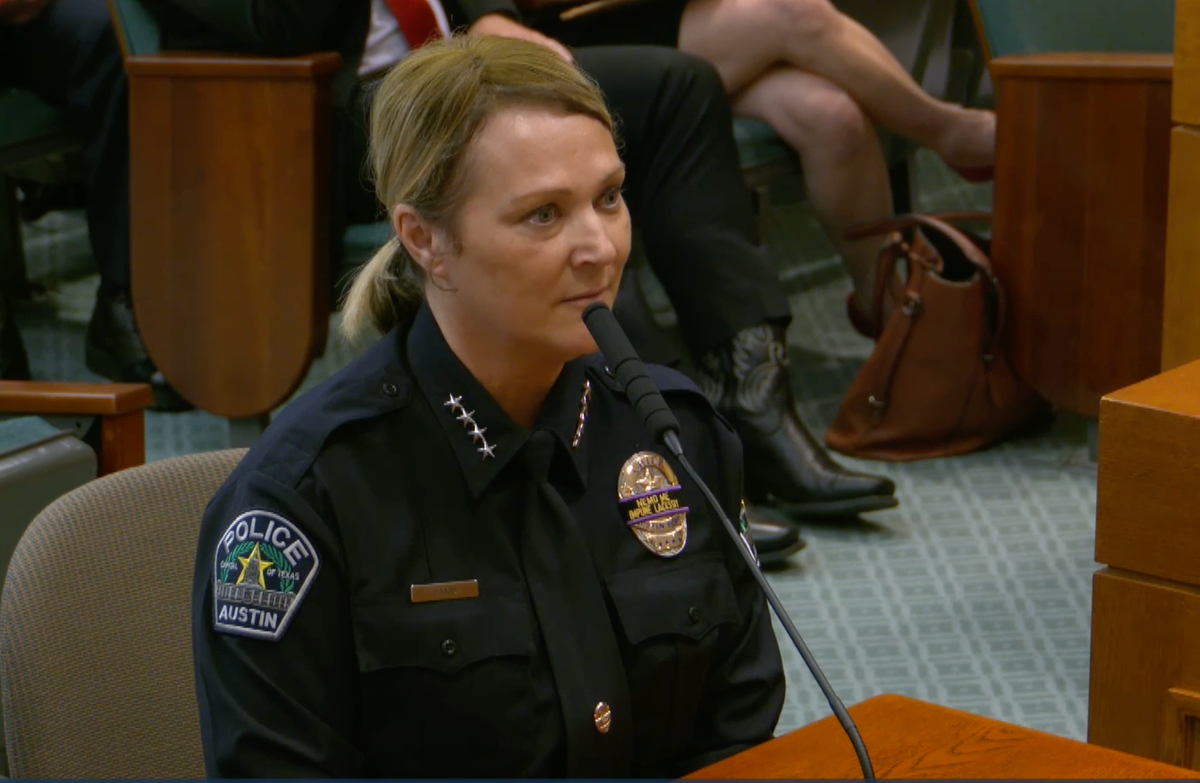
Finally, Chief Lisa Davis described the tremendous amount of police patrol time consumed by dealing with "high utilizers."
Austin Police officers are trained and willing to help people in crisis, but they are also serving as the default mental health transport and custody system for a highly defined subset of the population, and that is neither what they were trained for nor where they do the most public good.
She highlighted the case of a woman who had been arrested 63 times in 63 months. Fortunately, they were finally able to find her a placement at a facility where she showed incredible improvement; she is now back on the street but at least has access to medication that has significantly improved her mental health and she has not been arrested in two months.
But there is not nearly enough capacity in the system to offer treatment to everyone who needs it. There are various systems (Central Health, Integral Care, private hospitals) that can help at time, but there is not a single point where first responders know the person in crisis will receive care.
The state can address the problem, said Davis, by funding a crisis center in Austin (and other communities) that does not refuse patients brought by law enforcement.
If you found this article particularly valuable but you’re not ready to become a paying member, you can show your appreciation by buying me a cup of coffee to fuel further investigation and analysis of city politics.