Can the city make TxDOT pay for billboard removal?
It's their highway project.

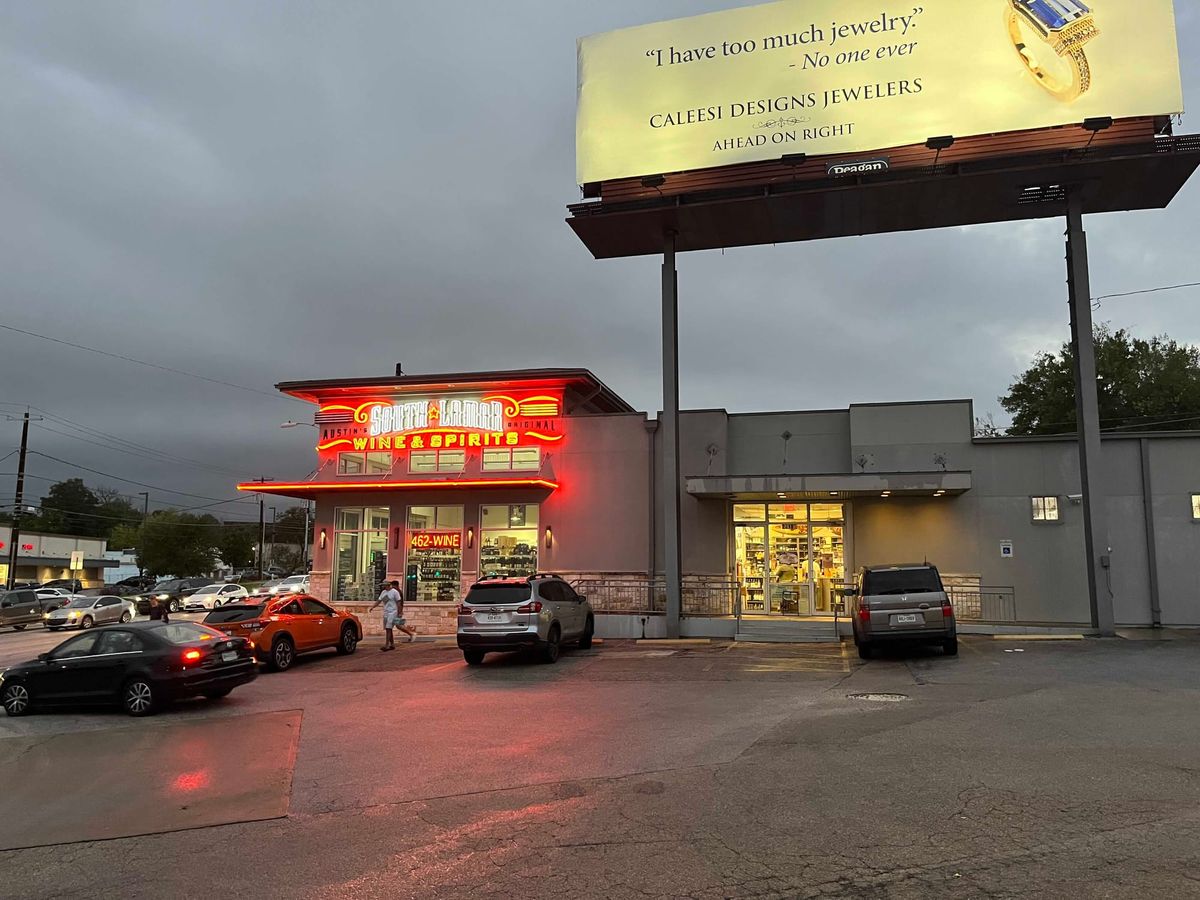
Pity the billboard owner. Nobody wishes him success.
"These billboards are pernicious," said Chris Gannon, a member of the Planning Commission, at the panel's Jan. 27 meeting. "I feel are kind of a toxic entity in our neighborhoods. I don't think anyone is pro-billboard."
This week's sponsor:

Curious if a condo regime is right for your property? I’ve completed 3,000+ condo projects across Texas and help owners and developers efficiently divide duplex, multifamily, and commercial properties for sale or financing. For more information visit Texas Condo Law or contact me at julie@texascondolaw.com.
And yet, Gannon and almost everyone else on the commission feel they have no choice but to recommend a change to city ordinance that will make it easier to put billboards near homes.
The commission's recommendation to Council is that billboards condemned as a result of major transportation projects be allowed to relocate within 150 feet of a residential use (house or apartment). That is far more lax than the current 500 foot restriction, but it is far more restrictive than what city staff has proposed: 0 ft.
There must be better options, right?
Since 1984 Austin has prohibited new billboards. But the roughly 580 that existed at the time of the prohibition cannot be removed unless the city pays the owner according to a state formula: 3x the average gross revenue for the past two years.
In instances where billboards are condemned due to public projects, the city allows the owner to move to a new location. Current code prohibits them from being relocated within 500 feet of a residential use (house or apartment).
Recently city staff drew up a proposed code change that included no restrictions The proposal was prompted by City Council, which last year passed a resolution calling for "more flexibility" in the rules around relocating billboards.
(This is not to be confused with a separate Council resolution about allowing digital kiosks)
City Council's stated reasoning is that major transportation projects, notably the I-35 expansion and Project Connect, will require the city to relocate an unusually high number of billboards.
The subtext, I think, is that Reagan Outdoor Advertising, the company that owns the vast majority of billboards in town, wants to keep its signs along the highway, whose imminent expansion will only make the billboards more valuable. There will be more cars, but they won't be moving any faster! It's a dream come true!
The problem is there aren't many places to move the signs along the highway that are in accordance with the city's current rules. There are a lot of homes near the highway.
At the Planning Commission's meeting, several residents of Cherrywood showed up to raise alarm at the prospect of billboards being moved closer to their homes.
"I am not opposed to resonzing these lots to enable increased density," said Jeffrey Wolf, a resident of E. 31st St. "I would welcome housing there. What I am opposed to is introducing a billboard behind my home – or any home, for that matter."
A representative for Reagan declined to comment.
Can the city make TxDOT pay?
A member of the commission, Peter Breton, raised an interesting point. At least in the case of the I-35 expansion, it is TxDOT condemning the signs, not the city. So why is it the city's duty to relocate them?
Could the city not simply force TxDOT to compensate the billboard owner the same way it paid the owners of other properties condemned for the highway expansion?
Trish Link, who oversees real estate for the city law department, did not have an answer for Breton. Nor did the law department immediately respond to a request for comment this afternoon. I reached out to TxDOT today and was told it might take some time to get an answer.
Based on my own research, it appears this is an issue that TxDOT has run into with other municipalities. Numerous bills have been filed at the Legislature over the years to force cities to either relocate the signs or compensate the sign owners. But it does not appear that any of them have been enacted.
A bill proposed in 2007 summarized TxDOT's dilemma:
When a highway is expanded to take in land occupied by a billboard, the billboard owner may attempt to relocate the billboard elsewhere, but instead of allowing the billboard to be relocated, the city will condemn the existing billboard and prohibit erection of a new one. A city has no incentive to consider relocation because the state, not the city, must pay a significant amount to compensate the owner for the condemned billboard.
Huh. So could the city of Austin get rid of some billboards and stick TxDOT with the tab? If that's not a win-win I don't know what is.
Please tell your friends to get their OWN subscription to the Austin Politics Newsletter! And if you found this article particularly valuable, you can show your appreciation by buying me a cup of coffee to fuel further investigation and analysis of city politics.