
Some interesting Austin data
How many more people are making $200k than in 2010?

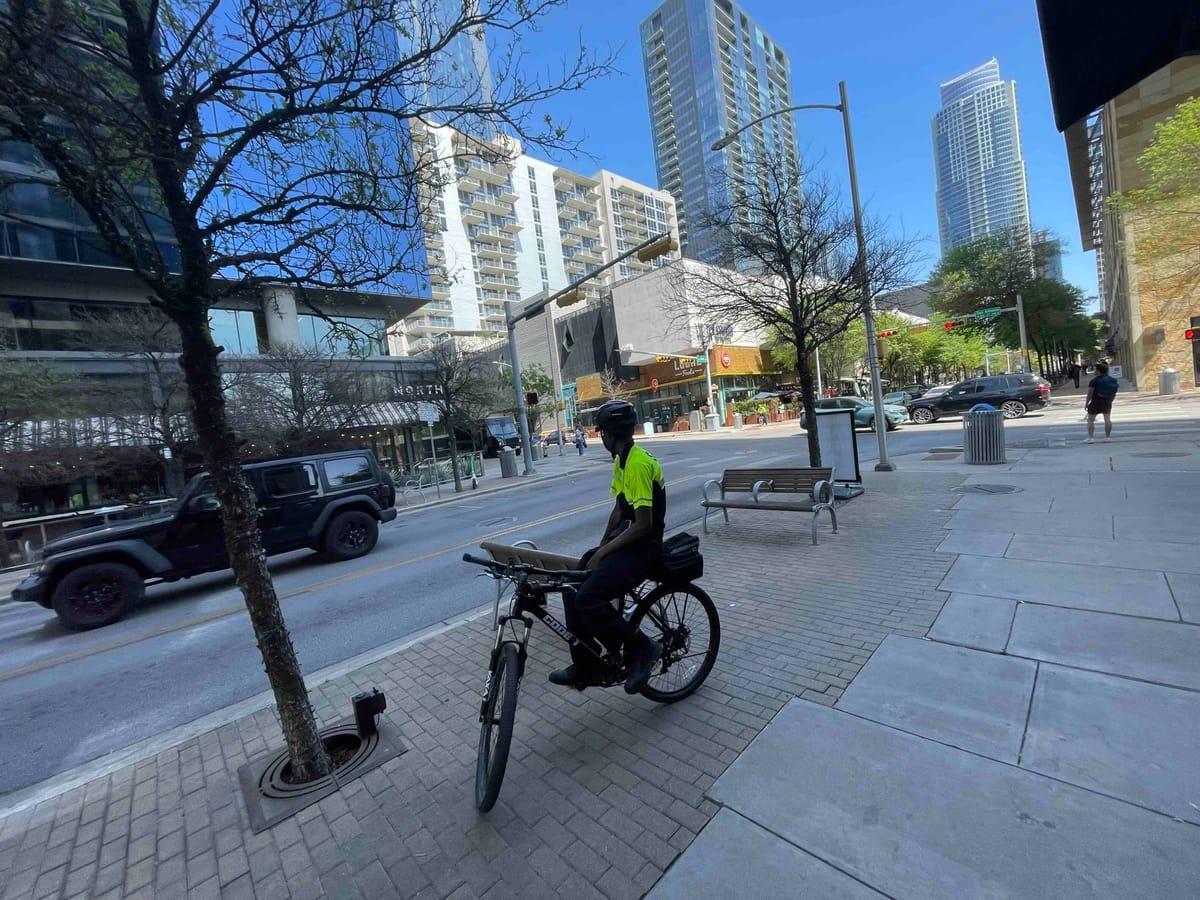
City Demographer Lila Valencia gave an interesting presentation last month on population trends in Austin and the surrounding area.
Thanks to this week's sponsor:

Founded by Amanda Brown, HD Brown Consulting provides a diverse range of real estate consulting services, including entitlements, land use and development, strategic community outreach, government relations, and more. We cater to the needs of discerning clients who are real estate developers and landowners operating across the Greater City of Austin metropolitan area.
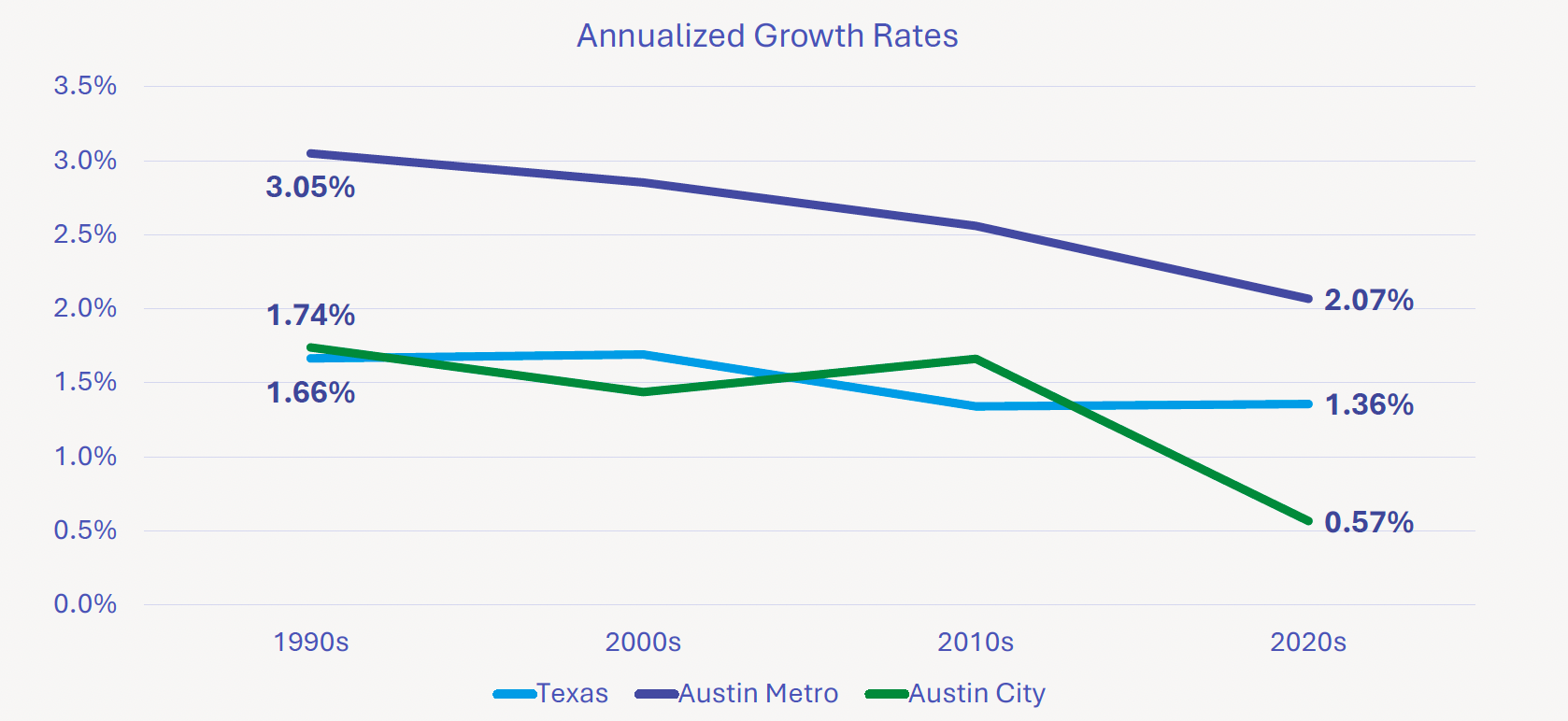
The population of the city of Austin, the Austin metro area and Texas are all growing, but the rate of growth has slowed for all three. The rate of growth in the city of Austin has dramatically declined over the past decade.
But keep in mind: the Austin MSA is still the fourth fastest growing metro area in the country.
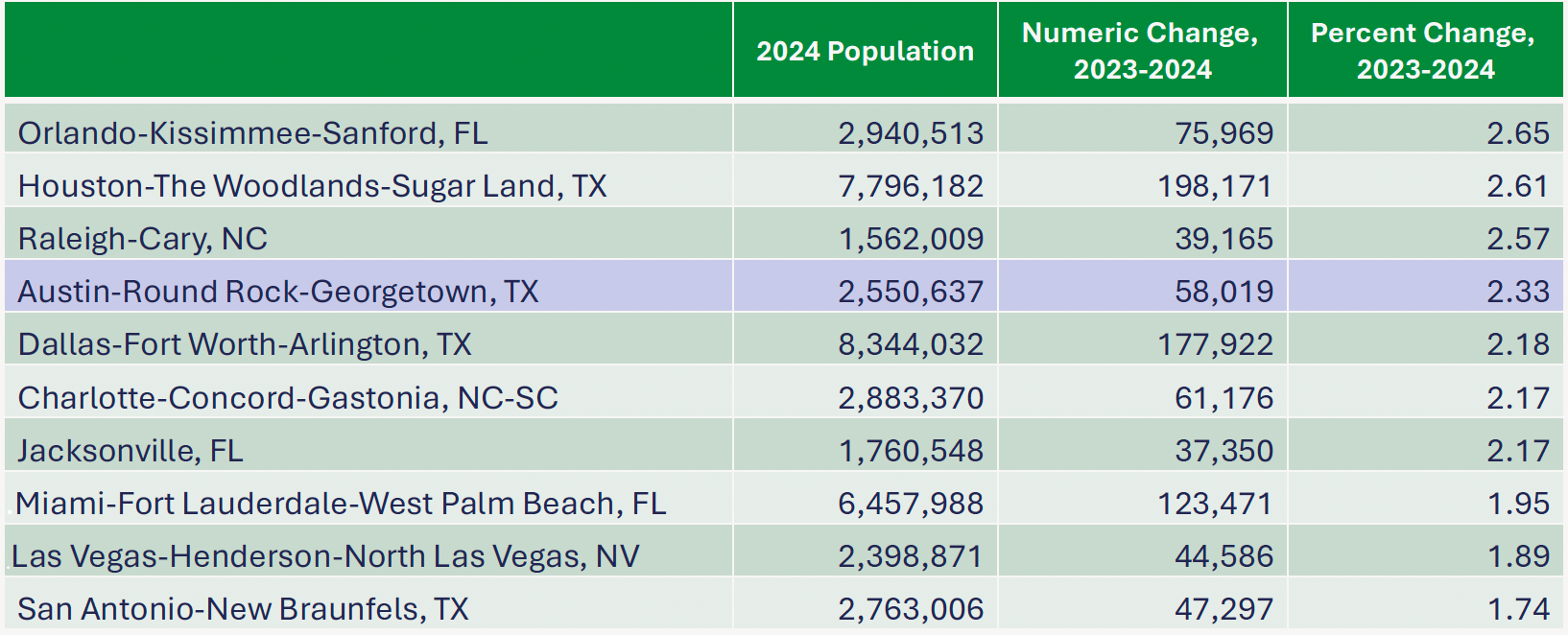
Note that every MSA in the top ten is in the Sunbelt. Four in Texas, three in Florida, two in North Carolina + Vegas.
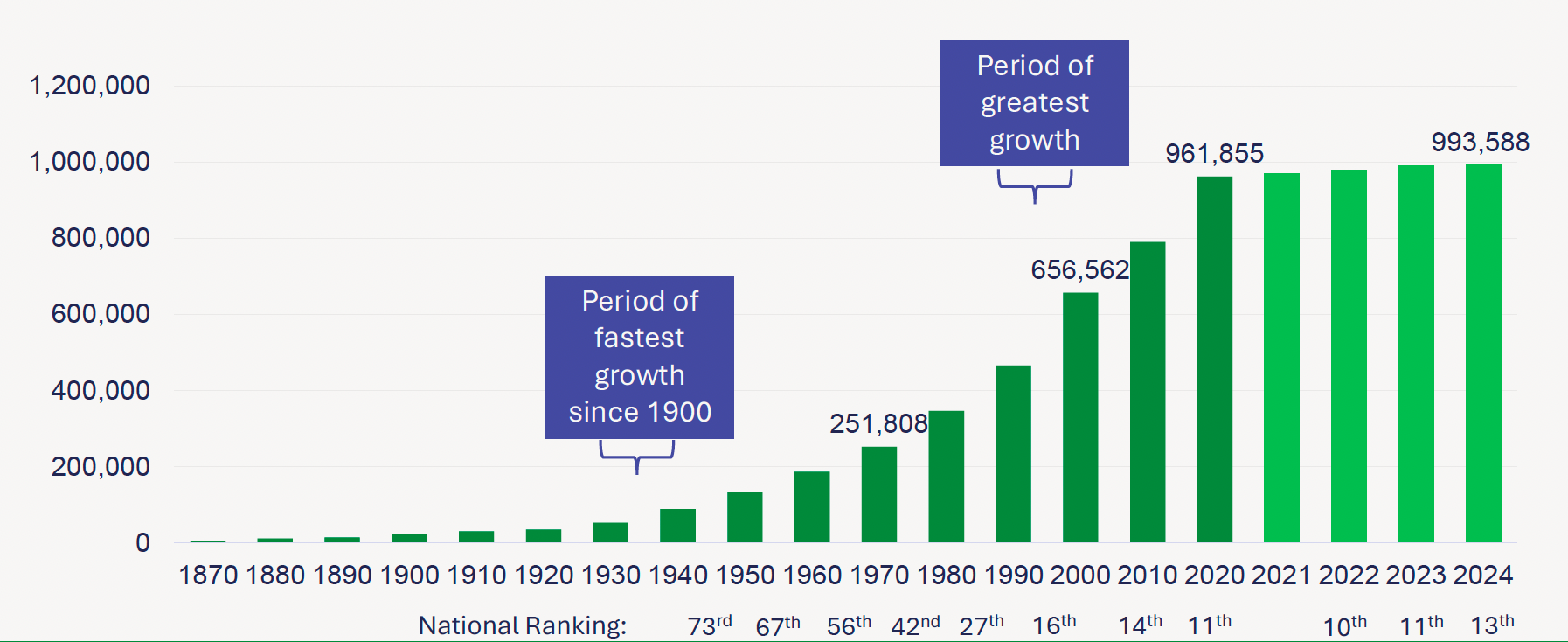
This slide illustrates the fact that rapid population growth has been the story of Austin since its founding. The pattern throughout the city's history has been that the population doubles every 20-25 years.
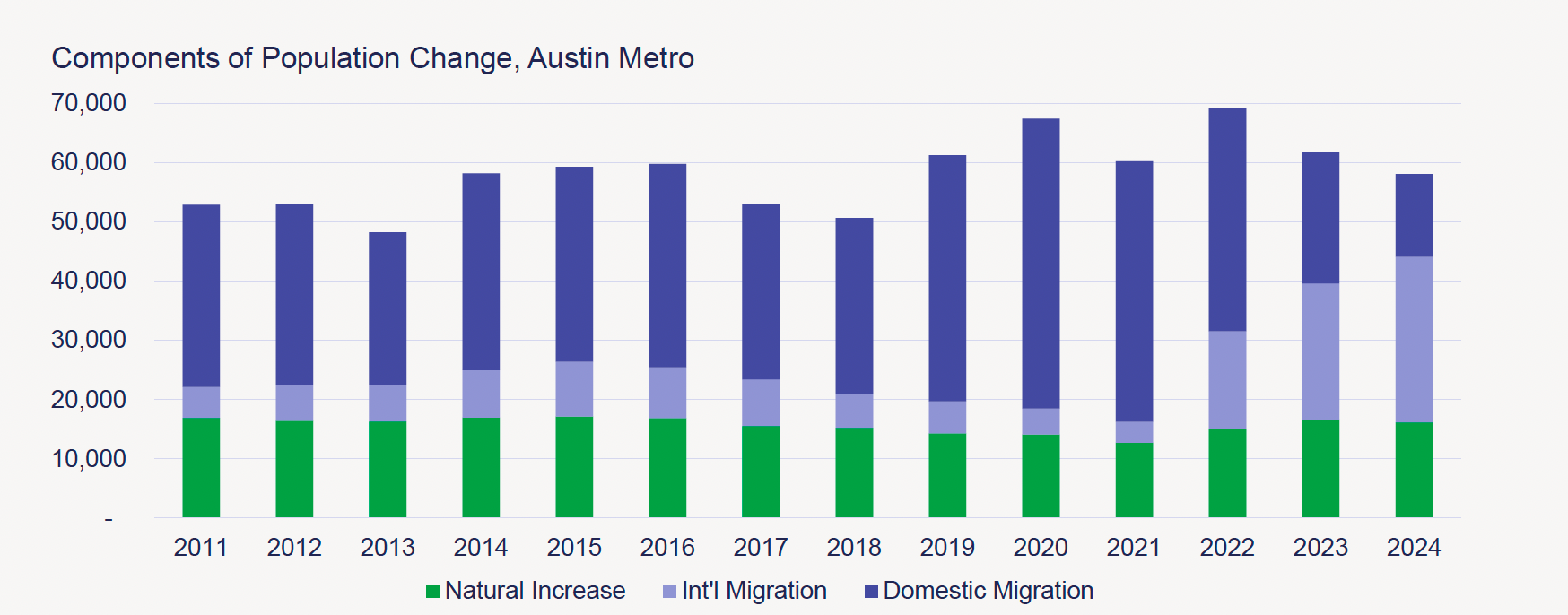
In recent history, migration has accounted for the great majority of population growth, as opposed to "natural" increases from births. What's interesting is the huge upswing in international migration in the three post-pandemic years.
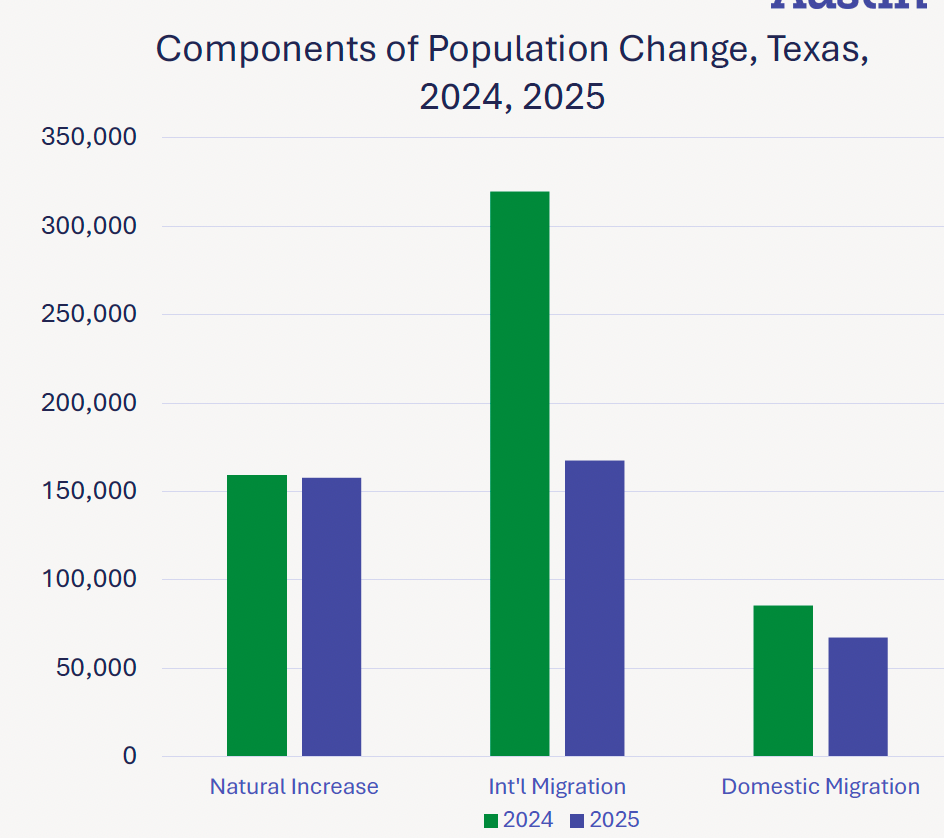
There is not yet Austin-specific data, but you can bet the number of international newcomers plummeted in 2025. International migration to Texas plummeted nearly 50%. Domestic migration also took a noticeable dip:
The presentation also makes clear a point that will no doubt be continually ignored by statistically illiterate journalists and politicians: Black and Hispanic population in Austin is NOT DECLINING! Those groups' share of the total population may be declining, but their absolute numbers are not.
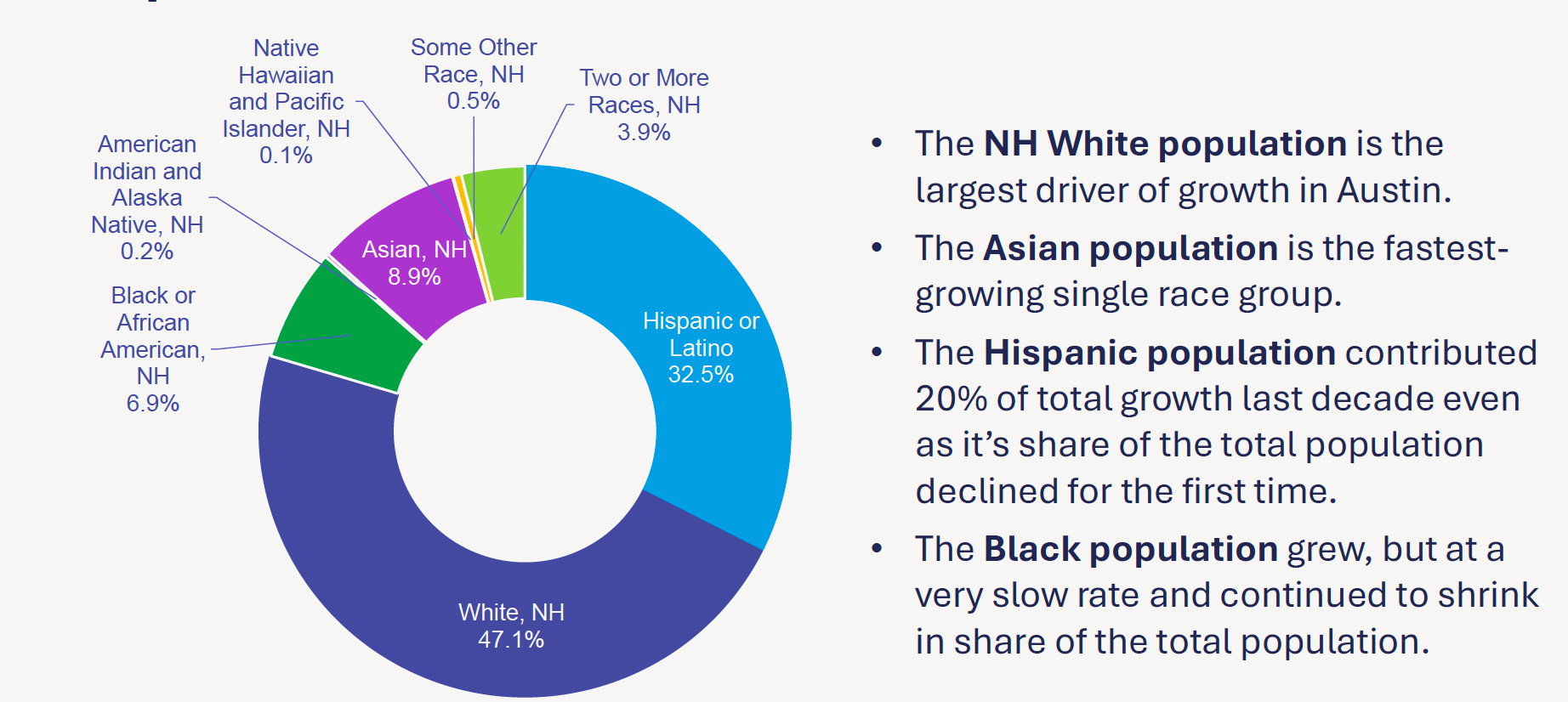
(The Black population indeed declined in the first decade of the millennium but has grown since. The Hispanic population has never declined)
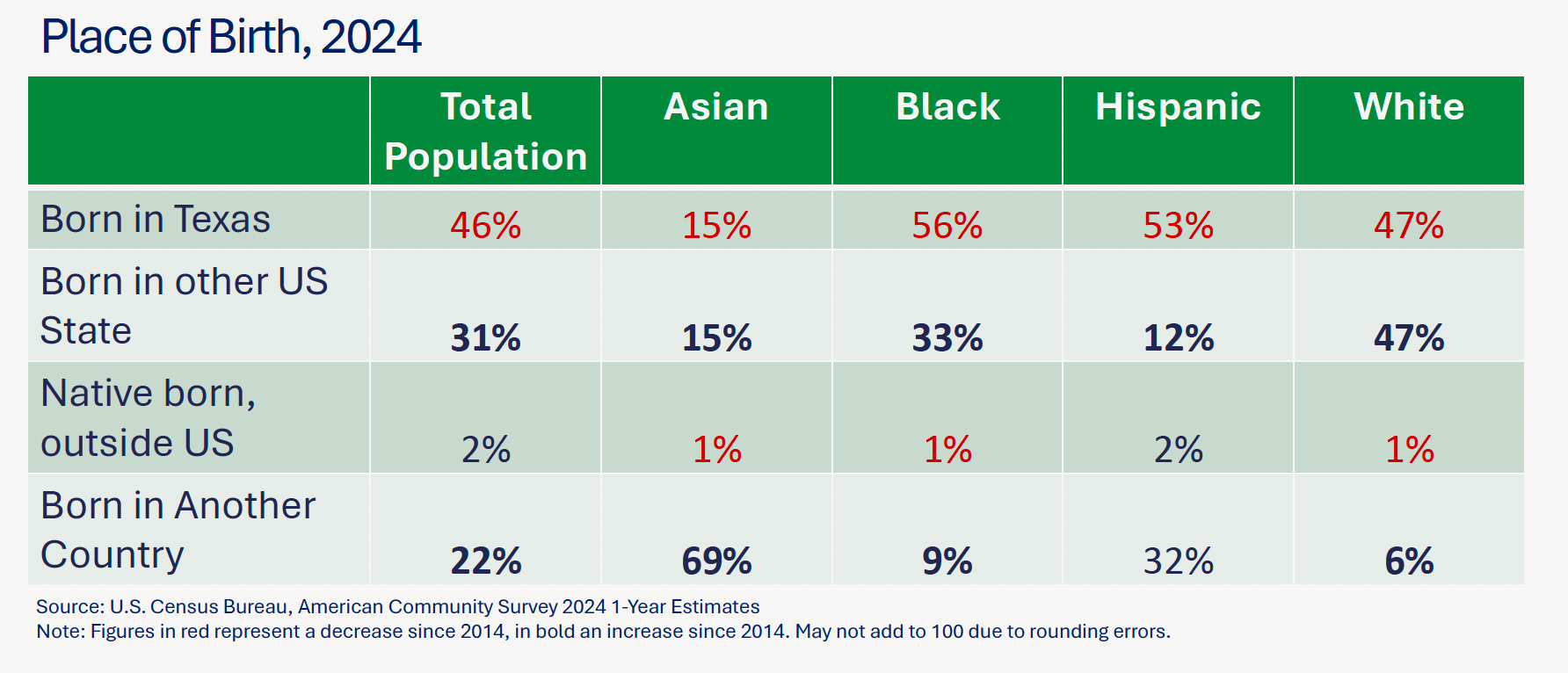
This was a really interesting stat that I'd never encountered. A slight majority of Austinites are not native Texans.
And then there is this slide on Austin income demographics that I don't think is very useful at all.
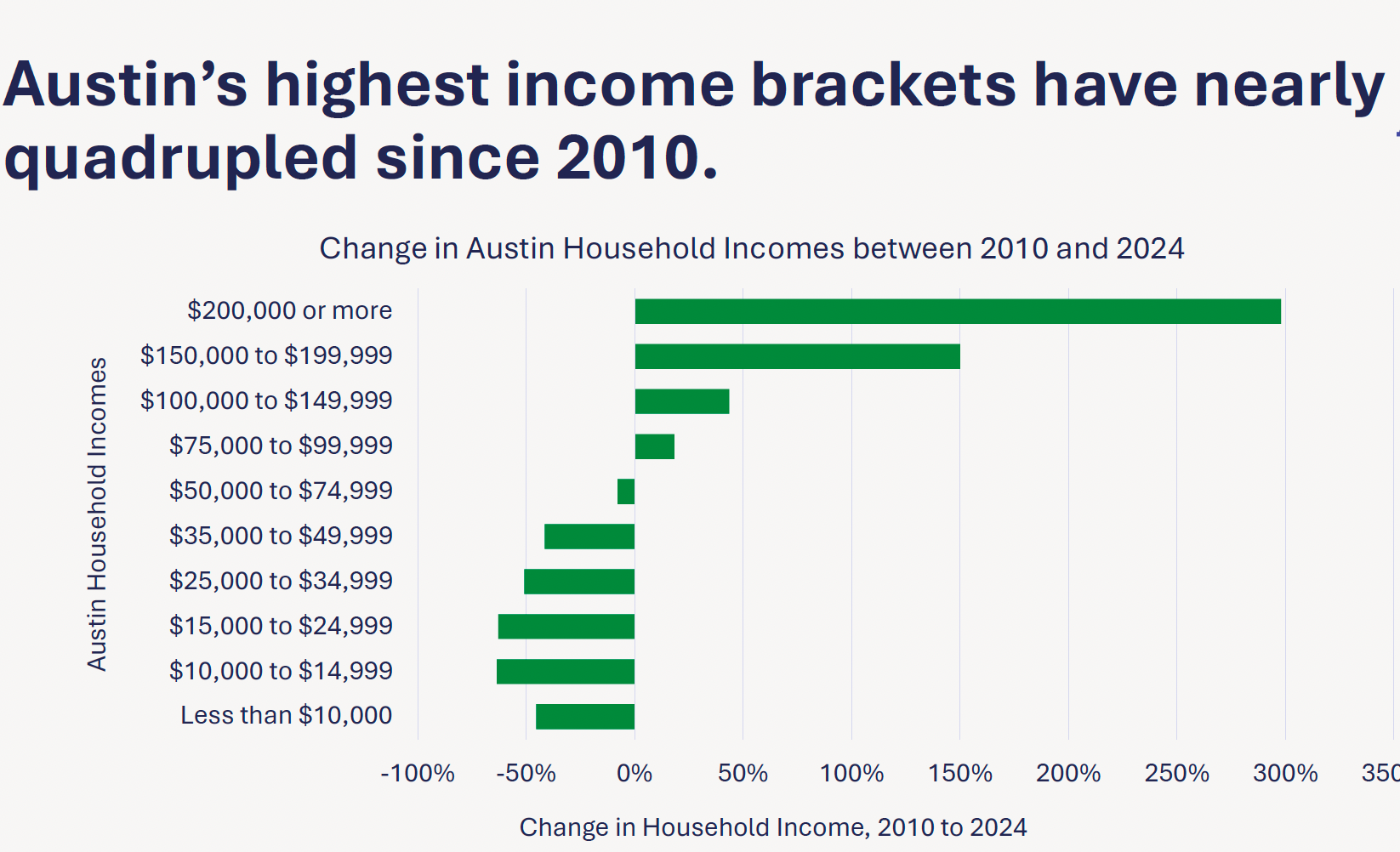
What's important to note is that these figures are not adjusted for inflation. An income of $200k in 2024 is equal to $139,000 in 2010. And $200k in 2010 is equivalent to $288k in 2024. So we should really be operating with a different definition of the "highest income bracket."
It also appears that this is in line with national trends. According to the Census Bureau, there were 21.5 million households with incomes north of $200k in 2024, compared to 4.7 million in 2010. That is more than quadruple!
This feels like one of those misinterpreted factoids that will get repeated ad nauseam, like the breathless coverage of the fact that an East Austin neighborhood had more dogs than kids. In fact, the United States has more dogs than kids!!
It may be true that Austinites are getting richer and/or that poor people are being pushed out of the city. But we'll need better data to prove it.
Please tell your friends to get their OWN subscription to the Austin Politics Newsletter!
Support independent journalism AND promote your business to a highly-engaged and influential niche of Austin leaders: Advertise on APN!