A safe place to drive
Driving on neighborhood streets is safer. Sorry.

In transportation policy, the small problems get much more attention than the big ones. For instance, people complain far more about traffic congestion than traffic deaths.
Similarly, people aren't nearly as bothered by speeding on major traffic corridors as they are by speeding on residential streets. But the former is far more deadly than the latter.
Thanks to this week's sponsor:

Founded by Amanda Brown, HD Brown Consulting provides a diverse range of real estate consulting services, including entitlements, land use and development, strategic community outreach, government relations, and more. We cater to the needs of discerning clients who are real estate developers and landowners operating across the Greater City of Austin metropolitan area.
Fatal crashes on "residential" or "neighborhood" streets with 25 mph speed limits are exceedingly rare. A single-car crash that killed the driver on Mearns Meadow Blvd last month was notable, but even that street invites higher speeds with its great width and slightly higher speed limit (30 mph).
The map from the city's Vision Zero dashboard documents every fatal (red) and serious injury car crash over the past four years. I-35 is by far the greatest contributor to road carnage, but SH 71 and US-183 do their part as well. Mopac is far safer.
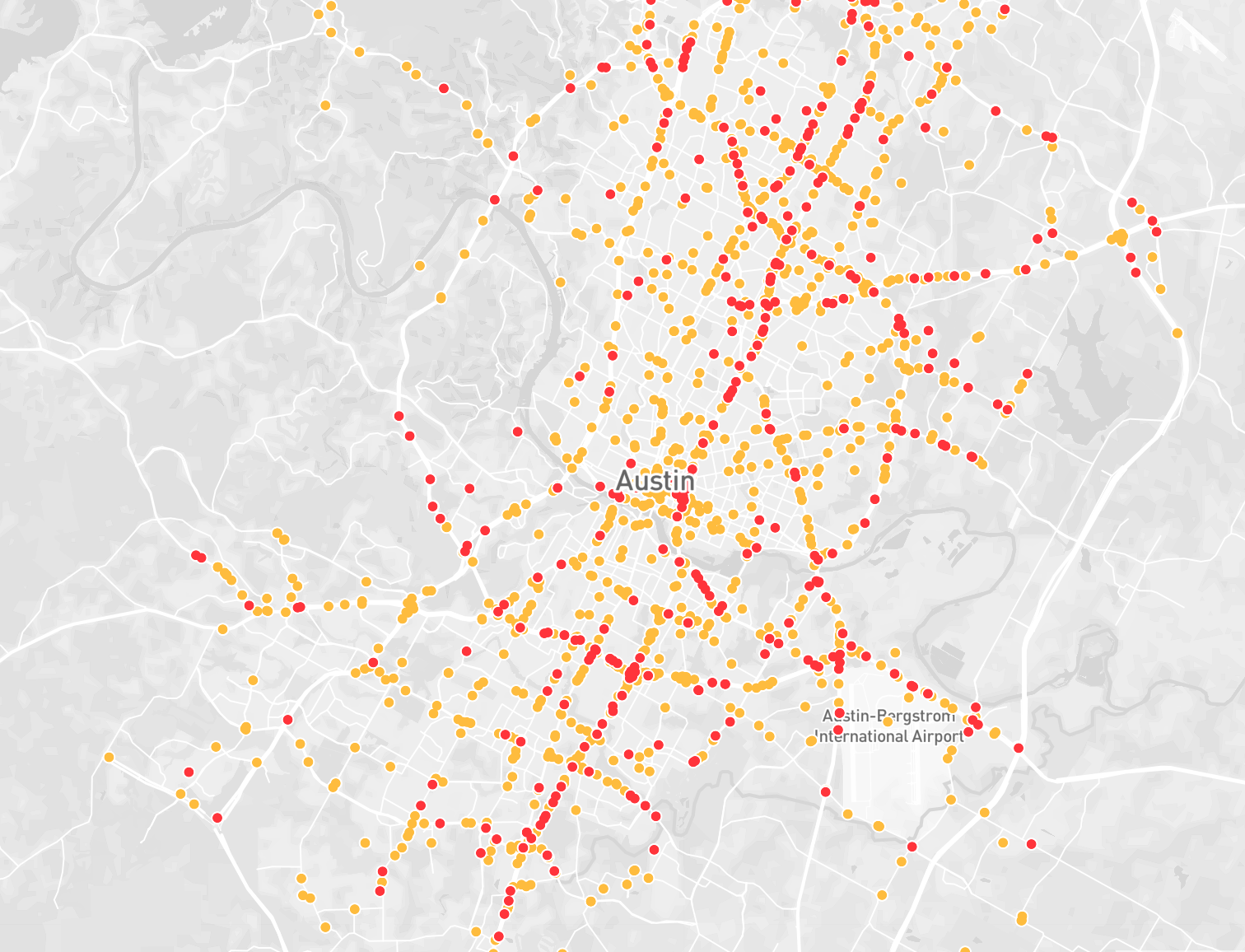
The point is that residential streets are safer – for everyone. This is because even in a city as car-brained as Austin, most residential streets are not designed to facilitate high vehicle speeds.
This is why I prefer not only to walk and bike on residential streets, but to drive on them. If you are not in a rush, which I rarely am, then driving on neighborhood streets is safer and nicer.
The problem is that many people generally don't like the idea of outsiders driving on their neighborhood street. It violates the Austin bargain: single-family neighborhoods are safe and serene and the corridors – where the apartments go – are dangerous and disgusting.
This is the bargain to which Transportation and Public Works Director Richard Mendoza deferred when he told City Council members at a January meeting that his department is trying to dissuade drivers from opting for safer routes.
"We want our folks to stay on arterial roads to get to their final destination," he said. "We need to make sure our arterials are functioning properly."
In an email to TPW, I asked for elaboration. Here's what I got back from a spokesman (emphasis mine):
While safety records could indicate more crashes occur on arterials, the City strives to operate streets per their intended function throughout our transportation network as defined in our Transportation Criteria Manual.
When our arterials (also referred to as Level 3 and Level 4 streets) function without undue mobility delay, drivers are more inclined to use these streets as designed for balancing local access with moving people and goods.
When drivers perceive that using local or collector streets (typically Level 1 and Level 2 streets, respectively) will reduce their travel times, whether accurately or not, they could attempt to use these streets as arterials by increasing their speed and exposing residents to safety concerns which would not otherwise occur as frequently with properly functioning arterials.
The thing is, it's very hard to "use a street as an arterial" because it is not designed like an arterial.
I was curious to find out what Adam Greenfield, executive director of Safe Streets Austin (and recent guest on my podcast), would think about it. Greenfield, like every transportation safety advocate, is keenly aware of the role that high speeds play in killing people. On the other hand he and his organization have also championed the "Healthy Streets" initiative, where neighborhoods put in place measures to discourage through-traffic.
His response:
I don't think the conversation should be about people driving on arterials vs neighborhood streets. It should be about designing our streets so that speeding can't happen anywhere.
At the same time, we can do better than a vision of our arterials as traffic sewers. Even the word "arterial" is problematic. These should be boulevards, pleasant destinations with an urban form that people love and visit en masse. Car-centric priorities have decimated our would-be boulevards as civic and economic powerhouses; it's time to start restoring them.
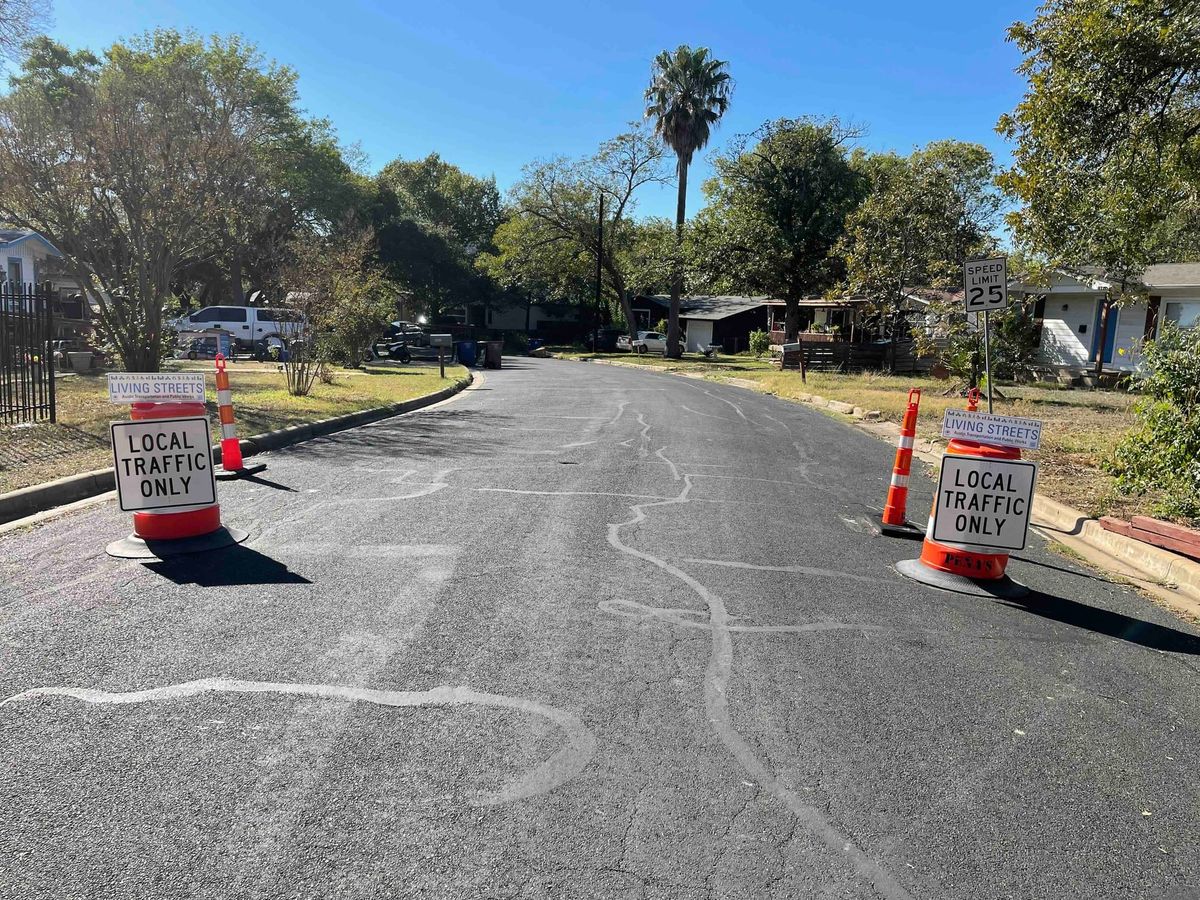
Simultaneously, our neighborhood streets deserve so much better. These should be vibrant civic spaces where people gather and enjoy life without the threat of cars killing them. The City's Living Streets program is nudging in that direction but so much more needs to be done.
Indeed, making everything safer is certainly the best option. But until that happens, don't be ashamed to drive on neighborhood streets. It's safer.
Is Austin housing really cheaper than ever?
This tweet was getting some action online the other day.
It's actually never been cheaper to rent in Austin, TX.
— Nick Gerli (@nickgerli1) March 8, 2026
The Rent/Income ratio across the metro has dropped to 18.3% - the lowest on record (going back at least 20 years).
Landlords are aggressively cutting rents at a time when incomes in Austin keep rising.
The typical rent is… pic.twitter.com/sVnNoJJhWY
In another tweet, Gerli, the founder of an app that provides real estate pricing forecasts, said that Austin has the lowest rent/income ratio of any major metro area in the U.S.
But is a city with the lowest rent/income ratio truly the most affordable? And is it really fair to say that Austin has "never been cheaper" before?
Not necessarily. We don't know if the steady rise in incomes has been evenly distributed. Is it easier or harder for the median Austin service worker to afford housing than it was 20 years ago? I don't know.
Housing costs have also not evolved evenly across the city. The change in Central East Austin, the poster child of gentrification, has been far more dramatic than in far south Austin, for instance.
So you should be wary of assuming that the rising tide resulted in a commensurate lift for every boat. But you should similarly be wary of the line of thinking, popular among Old Austin nostalgics, that the influx of wealth has necessarily made things harder on the working class. I specifically recall one member of a land use panel –– ironically a UT professor of business — suggesting that a recession would be good for the city.
If you think that's true, then I invite you to ask the next immigrant you meet why they chose Austin over Appalachia. Sure, there are some cultural considerations. But the biggest reason is economic opportunity.
Please tell your friends to get their OWN subscription to the Austin Politics Newsletter!
Support independent journalism AND promote your business to a highly-engaged and influential niche of Austin leaders: Advertise on APN!