Dog's Head project: Loud outcry, quiet approval
A tough vote for City Council.

Please enjoy the complimentary article below. And please consider becoming a paying subscriber to get all four articles per week!
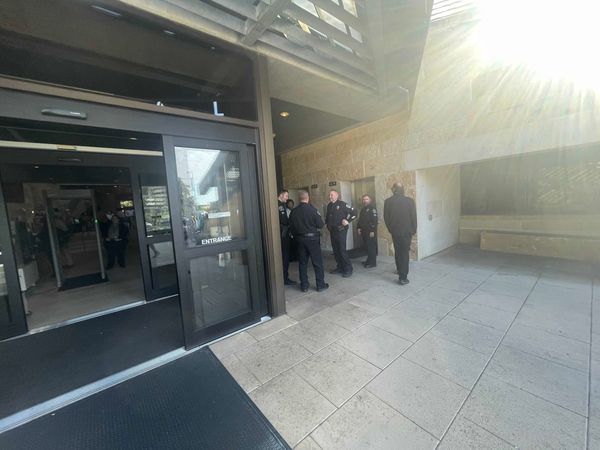
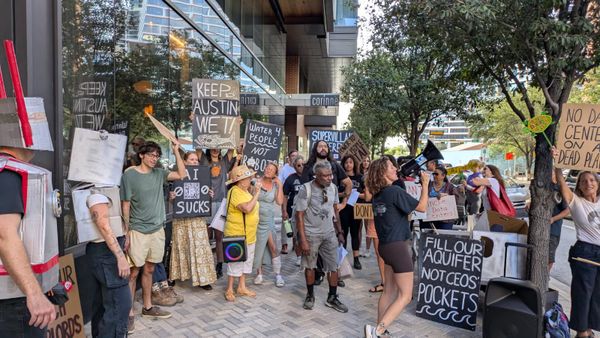
As you've likely seen reported elsewhere by now, City Council voted 7-3 on Thursday to support the Dog's Head TIRZ. It came after hours of overwhelmingly negative public comment.
This is only the beginning of the Dog's Head saga. There will be more debate about the planned infrastructure investments and development in the coming months. But for now, here are my takeaways on the public discourse on display last Thursday:
A giveaway to Amazon?
Many of those speaking against were clearly under the impression that City Council was authorizing a massive multibillion-dollar subsidy for Amazon, Endeavor or both. That is hardly surprising given that that is what they have been told by Save Our Springs and others.
That is not true, of course. The TIRZ simply allows the city to reimburse the developer for the cost of building public roads and other public infrastructure from the tax revenue generated by the new development. Usually public infrastructure is funded by all taxpayers, but in this case it will be paid off entirely by property and sales taxes generated within the Dog's Head development.
Mayor Kirk Watson made a point of explaining this: "Amazon is receiving no incentives and Amazon is receiving no reimbursements...If it doesn't generate the revenue necessary to reimburse, there will not be a reimbursement."
That may not be a nuance that matters in future elections. I would not be surprised to see Ryan Alter and Paige Ellis, the two incumbents running for reelection this fall, get hammered for the "Amazon giveaway."
The anxiety about AI only heightens the political risk of associating with Amazon. A repeated talking point from opponents is that a "robotics" factory is invariably aimed at taking away human jobs.
A pretty quiet dais
Following the hours of citizen comment, the discussion on the dais was very short. I think both those who voted for and against it owed their constituents a better explanation for their position on such a massive project.
Looking for an easy way to promote your brand and support investigative journalism? Become an APN sponsor!
Mike Siegel was the only 'no' vote who justified his opposition, expressing concerns about the lack of community input and transparency during the process. Neither Zo Qadri or Jose Velasquez explained why they voted against. This is somewhat predictable: neither of them say much during meetings and neither are known for being deeply engaged in policymaking. Velasquez, who is running for reelection, is generally a vote for development but will defer to anti-growth voices in his district (read: Susana Almanza) about projects in their backyard. Qadri is also running for reelection and is likely wary of being a yes vote on something that could be framed as corporate welfare for Amazon. Their votes weren't needed; they did what made sense politically.
Many of the supporters were only slightly more verbose. Paige Ellis didn't comment. The mayor took time to correct the misperceptions about the TIRZ, but he never summed up his reasons for supporting it.
Even supporters are frustrated
Even Council members eager to support economic development and an expanded tax base didn't appreciate the extreme secrecy and rushed nature of the TIRZ.
Marc Duchen, who said he had come to the meeting with the intention of voting 'no,' ended up supporting it, saying that he couldn't oppose the "transformational" economic opportunity it presents.
But he chided the developer and city staff for failing to provide basic information to the public about the project, leaving it to others to "fill in the gaps with fears and worst case scenarios."
"It's not the engagement and the communication we need for a pothole, never mind a 2,600 acre transformational project," he said.
Ryan Alter similarly demanded more transparency in the coming months as the city works on a regulating plan for the development.
"We are going to have more process here between now and March and we better do a better job," he said.
After the vote, City Manager T.C. Broadnax took responsibility for the disappointment over process, apologizing to the community as well as Council members who he recognized were bearing the brunt of the public's frustration.
"We will do better going forward and we must and I hate to put y'all in a situation where you need to make excuses for us," he said to Council.
Two types of opponents
There are two distinct camps among Dog's Head opponents: those who worry the project will fail and those who worry it will succeed.
The latter camp doesn't want what Endeavor is promising: a dense, mixed-use urban neighborhood. And they don't particularly care if it ends up being good for the economy or the city budget. They don't care if the land can actually be developed in a way that addresses the flooding risk. They're simply anti-growth. This group is exemplified by Save Our Springs leader Bill Bunch.
The first camp likes what Endeavor has proposed but is unconvinced that that's what will actually get built. They're worried the developer either doesn't really intend to build a sustainable, walkable community or that it won't prove practical for any number of reasons. Will there actually be enough demand for multifamily housing, office space way out there? What about the flooding risk and the potential unpleasantness of living in the flight path of an expanding airport? Is Endeavor eventually going to abandon the sustainable urbanism vision in favor of single-family sprawl that will generate relatively little tax revenue but consume a lot of city services?
The most articulate skeptic I saw was Robert Heil, a professional planner who worked for 30 years for the city of Austin in various planning and environmental protection roles.
"If everything goes to plan, in 20-30 years, the city will get some revenue out of it, and that's a good thing," he said.
But he then listed a series of questions and the unconvincing answers he believed the city was offering in response.
"Displacement? Well it's not that many people and I think we've got a plan. Environmental? Well, we're going to save the riparian corridor and the center is like Chernobyl. And the flooding, well, that's just an engineering problem, you move enough dirt, you pour enough concrete, the flooding won't be a problem...Is there going to be housing? Ehhh...maybe?"
Heil also rejected the notion that the city needed to meet Amazon's breakneck timeline in order for the Dog's Head to be developed. Endeavor has been buying up the property for years, he noted, because they recognize its value to a variety of potential customers, not just Amazon.
Finally, he raised concerns about Amazon's water usage. The company does not need Austin Water's permission, he said, to "go straight into the aquifer, use groundwater, completely unregulated, as much as they want."
"We are waiving enormous amounts of regulatory oversight and development standards in exchange for a water-hungry robot factory and a bucket of fuzzy promises," he said. "We can do better."
Zach Faddis of AURA, the urbanist group, said the organization wasn't taking a position on the project. Their priority, he said, was for any development to be dense, walkable and transit-oriented. He urged the city to evaluate the fiscal implications of different levels of density. And, of course, he urged the city not to build "six-lane arterials that carve apart the neighborhood fabric."
NHM's misleading tally
Public comment at Council meetings is NOT a reliable gauge of public opinion.
The great majority of those who showed up at City Hall and spoke were against the project. However, among those who merely signed up to register their position (without speaking), far more were in favor. Natasha Harper-Madison showed the tally (1,478 for & 645 against) as evidence of the silent majority being overshadowed by the "vocal minority."
Lol, come on. I don't think even the most adamant supporters of the project would argue there is a groundswell of grassroots support for the TIRZ. The reason the 'FOR' column is so inflated is that a bunch of Endeavor employees (there are a ton of them) signed up in support of all seven items. And based on how many of them were joined by people with the same last name, they probably got their spouses to do the same. Endeavor does the same thing with campaign contributions, although in that case, they want the elected officials to know where the support is coming from.
Please tell your friends to get their OWN subscription to the Austin Politics Newsletter! And if you found this article particularly valuable, you can show your appreciation by buying me a cup of coffee to fuel further investigation and analysis of city politics.