The I-35 divide on the dais
Watson tries to save money.

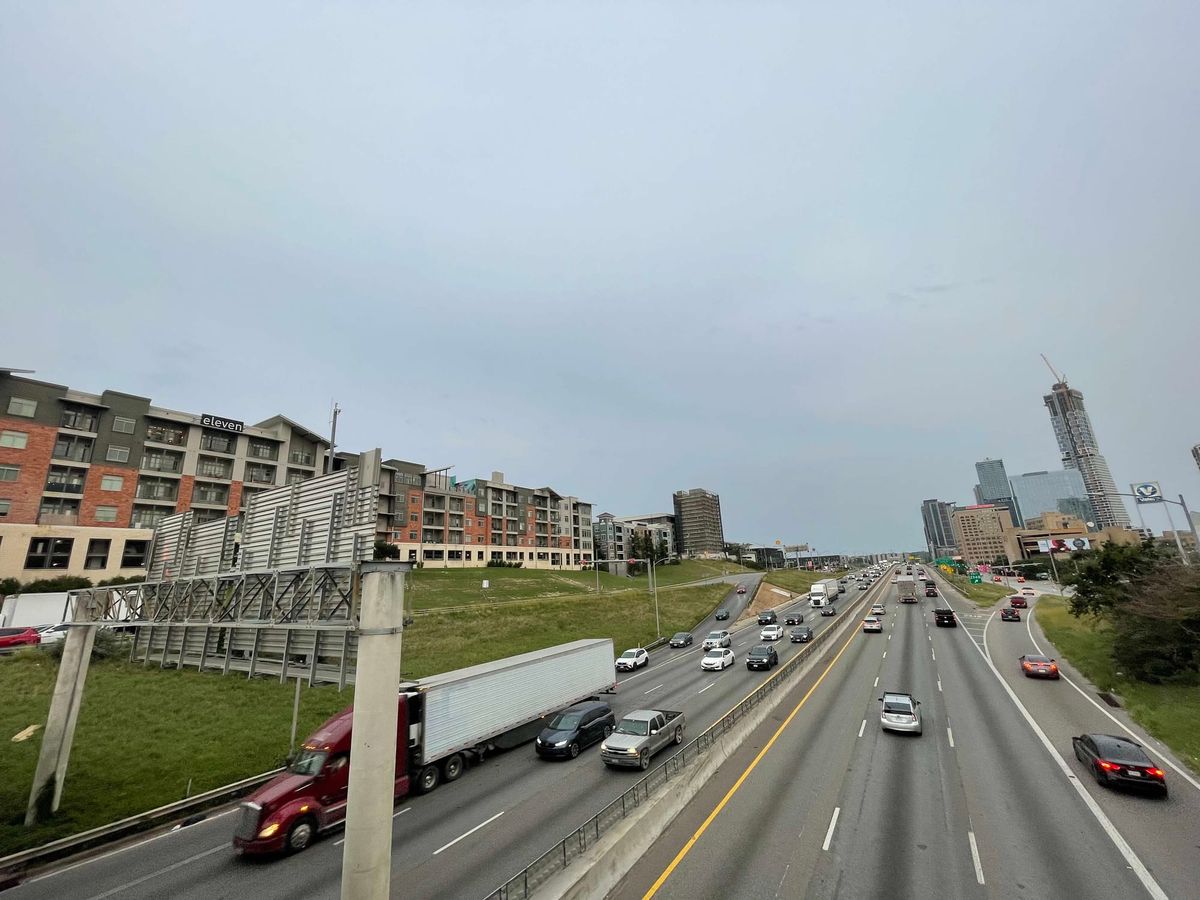
On Thursday Mayor Kirk Watson proposed a major scaling down of the I-35 "Cap & Stitch" plan that immediately garnered support from two Council members.
The problem is that at least five Council members are opposed. That means Watson would need all three votes that aren't spoken for: Marc Duchen, Paige Ellis and Vanessa Fuentes. Ellis tells me she is undecided. Fuentes, who just had a baby (!) was not available for comment, but a spokesperson said she "might be present" for the May 28 vote. My guess is that Duchen will support the cheaper plan, but I was not able to reach him Monday evening.
In May of last year, Council voted to commit $104 million to build the structural elements for three future highway caps: one between Cesar Chavez & 4th St; one between 4th St & 7th St; and one at 11th & 12th Streets.
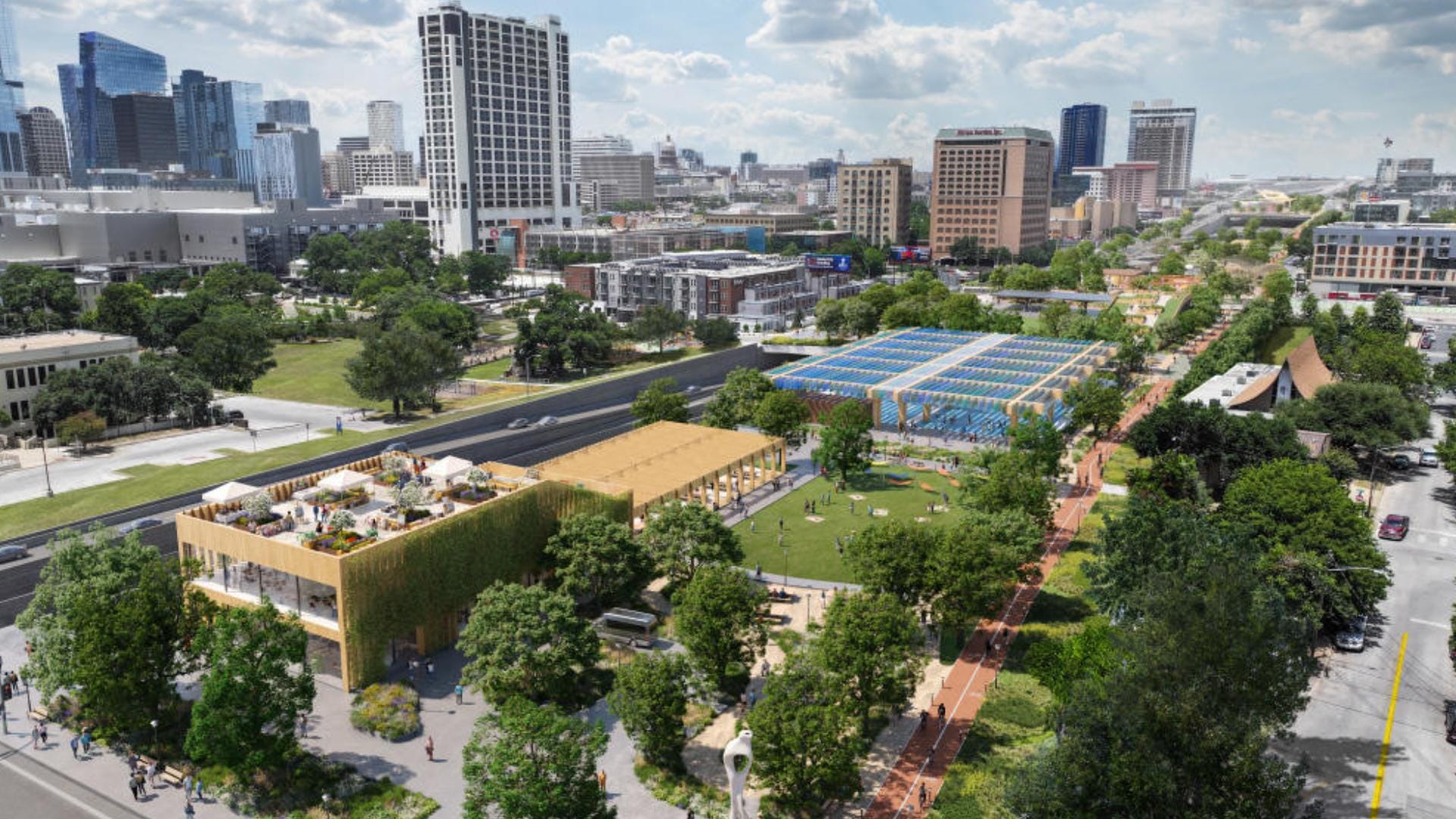
Council has not, however, committed any money to building the caps themselves. A major blow to the funding plan came in August, when the Trump administration rescinded a $105 million grant the city had been awarded in 2023 to fund the construction of the Cesar Chavez-4th St cap.
Given that there is no other obvious funding source for the other two caps besides Austin's weary property taxpayers, city staff has recommended that Council not commit any more money to the plan. And even Chito Vela, one of the staunchest advocates for the caps, has agreed that funding them is not feasible in the near future. He and some others have instead argued that the city should still build the support structures now so that the opportunity for caps remains in the coming decades. But whether that opportunity arises in 15 years, 30 years or never is unclear.
In his lengthy post on the Council message board, the mayor said he wanted to offer a compromise that would come at a lower cost but at least deliver something that people would be able to experience near-term. To wit:
"I would like for us to have something that folks can enjoy now (or when the I-35 project is completed) and not have caps only sometime out in the distant future, if at all. I’d like the people paying now to get some of the benefit. Planning now and selecting an option that can be completely built will allow our community the ability to enjoy a deck plaza at the completion of the I-35 CapEx project, all the while supporting long‑term fiscal stewardship to the citizens of Austin."
Watson is thus proposing a very small 1.2 acre deck plaza between Palm Park and E. 3rd Street.
He notes that this cap, unlike the others, would also cover the frontage roads, "creating a complete land bridge from the park to the East side."
He is also proposing that the city maintain funding for the support structures of the 11th/12th Street cap but abandon plans for the larger caps between Cesar Chavez & 7th Street.
Why preserve the opportunity for an 11th/12th St cap but not the others? Well, the former is cheaper because it's smaller. But there's also a symbolic importance attached to 11th Street because of its association with Austin's Black community.
The estimated cost of Watson's proposal is $49.8 million — $41.3 million for the 3rd St mini cap and $8.5 million for the 11th/12th St support structures.
Watson's proposal was quickly embraced by Mike Siegel and Krista Laine, two of the most vocal skeptics of going big on the caps.
The mayor's proposal drew a quick rebuttal in favor of staying the course signed by five Council members: Chito Vela, Ryan Alter, Jose Velasquez, Zo Qadri and Natasha Harper-Madison.
The other group argues that Watson's proposed cap is both too small to be a meaningful community space and that it doesn't offer a lot of value as a crossing because TxDOT has already planned to build "enhanced" crossings a block to the north at the Red Line and few blocks to the south at Cesar Chavez.
"It is too small to generate economic development, too small to host amenities and events, and right between two enhanced crossings," they wrote. "While we acknowledge the proposed stitch is cheaper than a cap, it is still $41 million dollars for a project with very few benefits."
Watson may be betting that linking the deck to Palm Park will prompt the Waterloo Greenway, the nonprofit funding the development of the Waller Creek Chain of Parks, to take some ownership of the deck and perhaps pay for its maintenance costs (estimated at $500k/yr).
I am sympathetic to Watson's desire to cut costs and build something, but I think a better use of the funds might be to just try to build as many crossings as possible, including to the north and south of downtown.
Watson has generally been pretty quiet on this issue. He has sat silently on the dais as his colleagues have debated the merits of pumping hundreds of millions of dollars into caps and stitches. He quietly voted in favor of the scaled down vision that Council approved last year, which discarded plans for two caps further north on the highway between Hyde Park and Cherrywood.
On one hand, this is generally Watson's style. He shies away from public debate in favor of behind-the-scenes negotiations. But this issue in particular has to be somewhat awkward for him. The premise of the debate is that the gigantic trench TxDOT is building through downtown is a blunder requiring mitigation. Watson, of course, devoted much of his career in the Legislature to getting that trench built.
Vela is right when he says that a widened I-35 without caps is a "complete and total disaster." The painful truth in city government is that not all disasters are worth fixing.
Please tell your friends to get their OWN subscription to the Austin Politics Newsletter! And if you found this article particularly valuable, you can show your appreciation by buying me a cup of coffee to fuel further investigation and analysis of city politics.
Looking for an easy way to promote your brand and support investigative journalism? Become an APN sponsor!