A depressing Project Connect update
It's hard to be optimistic.

Please enjoy the complimentary article below. And please consider becoming a paying subscriber to get all four articles per week!
Last week the Texas Tribune wrote an article on Project Connect. It wasn't perfect, but unlike most articles on the subject, it actually consulted some people who know what they're talking about.
There were some brutal quotes from Eric Goldwyn, director of the Transit Costs Project at NYU:
“Look, I’m a New Yorker, I don’t drive, I’m as pro-transit as it gets,” Goldwyn said. “But the people of Austin voted for something, and maybe they were sold a bill of goods that could not be delivered. I don’t know, but that’s not good.”
Then there was this:
Goldwyn said the project’s per-rider costs are alarmingly high, and it might make more sense to serve the project’s expected demand with bus rather than light rail. It used to be that U.S. rail projects cost between $50,000 to $75,000 per rider, Goldwyn said, high compared with other countries. The Austin project is among an emerging group of rail projects with per-rider costs exceeding $100,000, he said.
It's pretty sobering to see a leading transit scholar suggest that Austin has screwed up so badly that it might be better off simply giving up on high-capacity transit.
The sad fact is that, whether or not you support staying the course on this rail line, there is not actually a better alternative to rail. There's a reason that nearly every major city in the world has a rail network. It's the most efficient way to move a large number of people. You can mimic some of rail's advantages with Bus Rapid Transit — buses that operate in dedicated lanes — but you can't get all the way there. Bus ridership will always be lower.
Some have this idea that new technology will allow major cities to make do without traditional public transit. They imagine a future where driverless Ubers will be so cheap that even people in car-centric cities like Austin will be able to easily opt of car ownership. I am very skeptical that that will actually happen, but even if it does, it does not actually solve for the congestion issue. I am optimistic that robotaxis will make fewer fatal errors than human drivers, but there are still only so many you can fit on N. Lamar.
Whether or not this rail segment is actually built by 2033, for the foreseeable future public transit in Austin will continue to be little more than a safety net system that primarily serves the poor and disabled. It will not meaningfully compete with single occupancy vehicles for middle class travelers, many of whom will continue to shell out a huge chunk of their income to cover the unpredictable (but consistently high) cost of owning multiple cars. Pre-pandemic, the City Council adopted the Austin Strategic Mobility Plan, which set a goal for tripling transit mode share from 4% to 12% by 2038. That goal appears beyond delusional at this point.
This is why if I were in charge, I would focus on building a network of pedestrian/bike highways, otherwise known as urban trails.
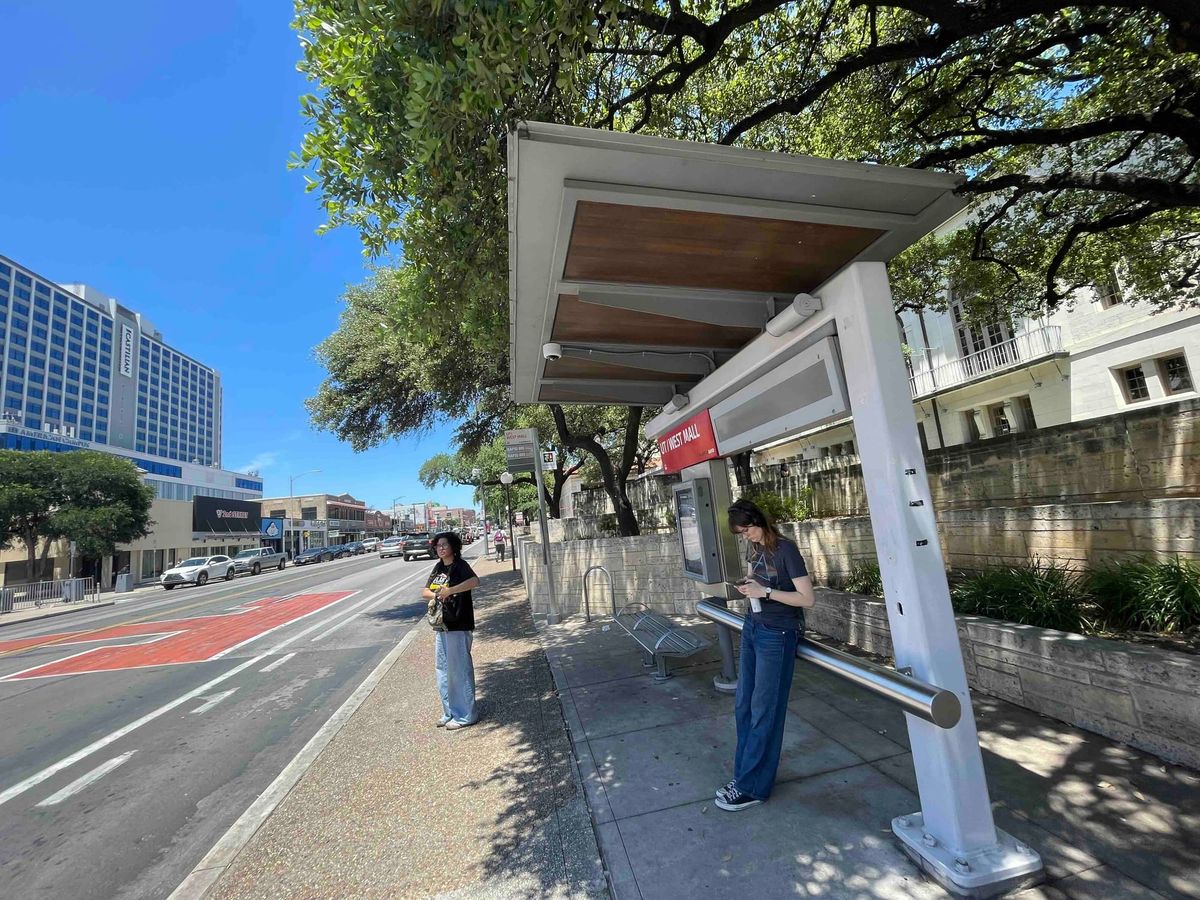
One piece of good news on Project Connect is that the two new MetroRapid bus routes that it funded are finally kicking off frequent service next week. Cap Metro says they will operate at 10-minute headways on weekdays. You have to hope that this significantly raises ridership.
So, what now?
I have to admit: When I supported Project Connect in 2020 I did not appreciate just how bad the U.S. has become at building infrastructure.
As Goldwyn himself has extensively documented, America has become very bad at building public transit. But we've also become very bad at building other things, including highways. At first glance it seems ironic that such a fervently car-brained country would be bad at building roads, but it's also the story of the American auto industry, which has largely given up on building economy vehicles in favor of building expensive toys.
So yeah, Project Connect is a tragedy. Just like California High Speed Rail. Just like the city of Austin's corridor projects. Just like the I-35 expansion.
Yes, the I-35 expansion, which TxDOT still laughably estimates at a cost of only $4.5 billion. Somehow their pre-pandemic cost projection of $4.9 billion was actually revised to $4.5 billion at the same time that every other project's costs have skyrocketed. Unless TxDOT has discovered some cost-cutting innovation that it is not applying to any of its other projects, the actual cost will be far greater. Just look at the TxDOT Highway Cost Index, which shows how dramatically costs have escalated for all of its highway projects since the pandemic:
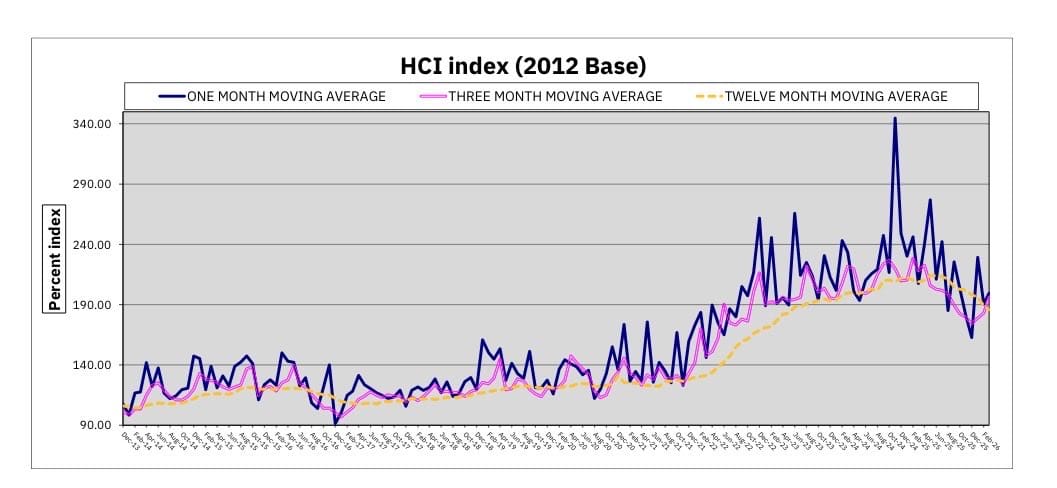
But no worry, TxDOT will just issue whatever debt is necessary to finish the unnecessary project. That pretty much sums up the tragedy of American infrastructure. We always find the money for highways.
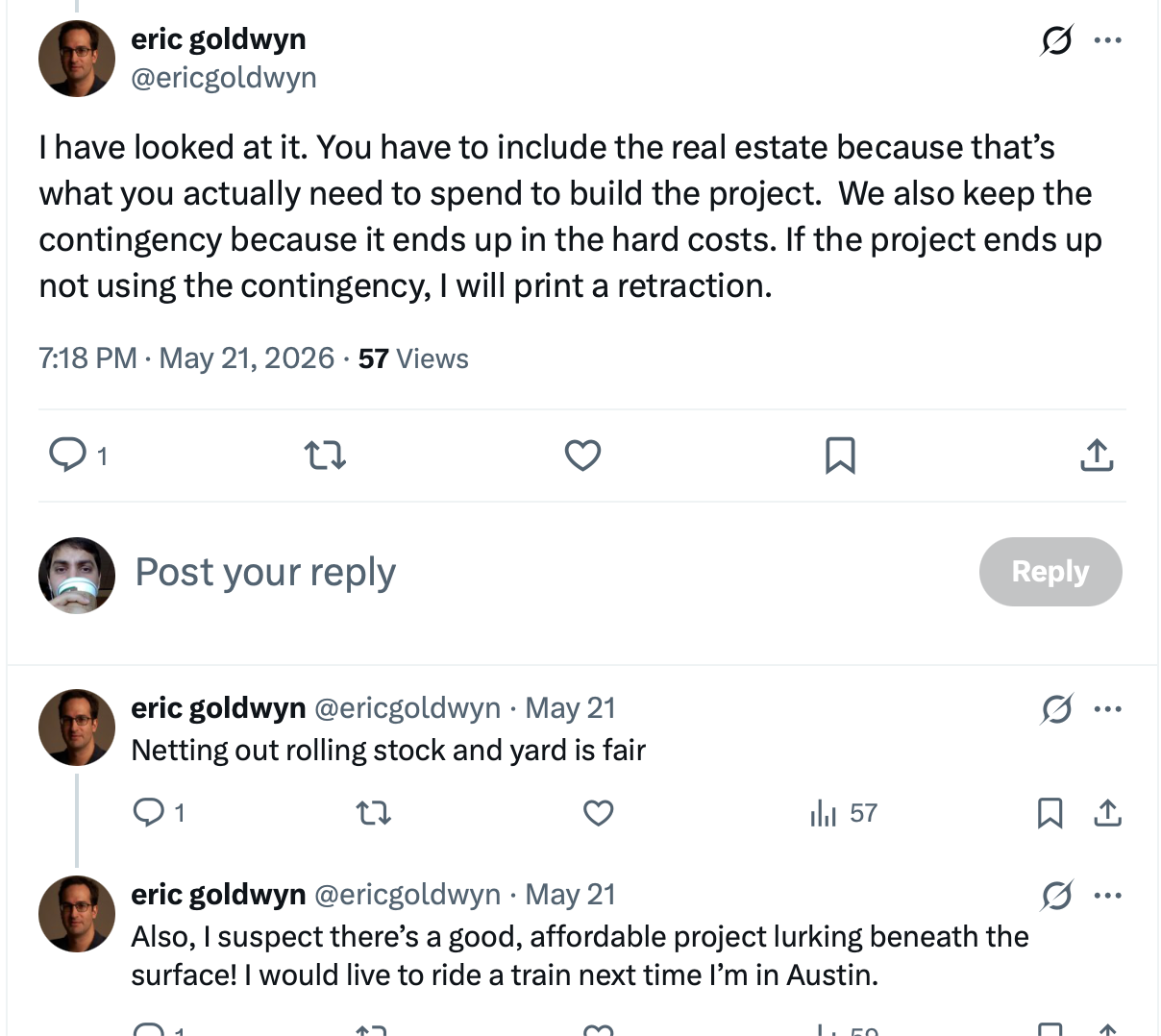
Over on Twitter, Julia Gonzalez Altamirano pointed out that the new cost estimate for rail includes a substantial "contingency" and that subsequent phases of the project will not require the substantial investment in a rail yard and the train cars themselves. Goldwyn said that points two and three were fair but replied that his baseline assumption is that the contingency will invariably get gobbled up.
The key to cost containment, however, is good oversight. Unfortunately the board tasked with overseeing the project has not shown any interest in asking hard questions of the staff and consultants. This is underscored by how they've rubber-stamped the ludicrous salary bumps for Greg Canally, CEO of the Austin Transit Partnership:
The ATP board hired Canally, then the project’s chief financial officer, as interim CEO in 2022, after ousting his predecessor, at an annual base salary of $310,000. The following year, the board gave Canally a nearly 18% bump to $365,000 when they hired him as full-time CEO. Last year, the board bumped up Canally’s pay once more — to nearly $405,000, about an 11% increase.
I don't even know what to say. Why?? Nobody else in local government got a raise like that. Double-digit raises imply exceptional performance. Is there evidence that Canally has performed exceptionally? Is there some scenario where things would have turned out worse if not for his management and accounting wizardry? The route would be shorter? It would cost even more?
If Canally and ATP want to redeem themselves, their priority should be extending the rail line up North Lamar — at least to Crestview but ideally to the North Lamar Transit Station — as soon as possible. That (NOT the airport!) is where all the riders are! That is what could actually significantly reduce the per-rider cost of this project. The other thing, of course, would be to lift as many limits on the densification of Central Austin as possible.
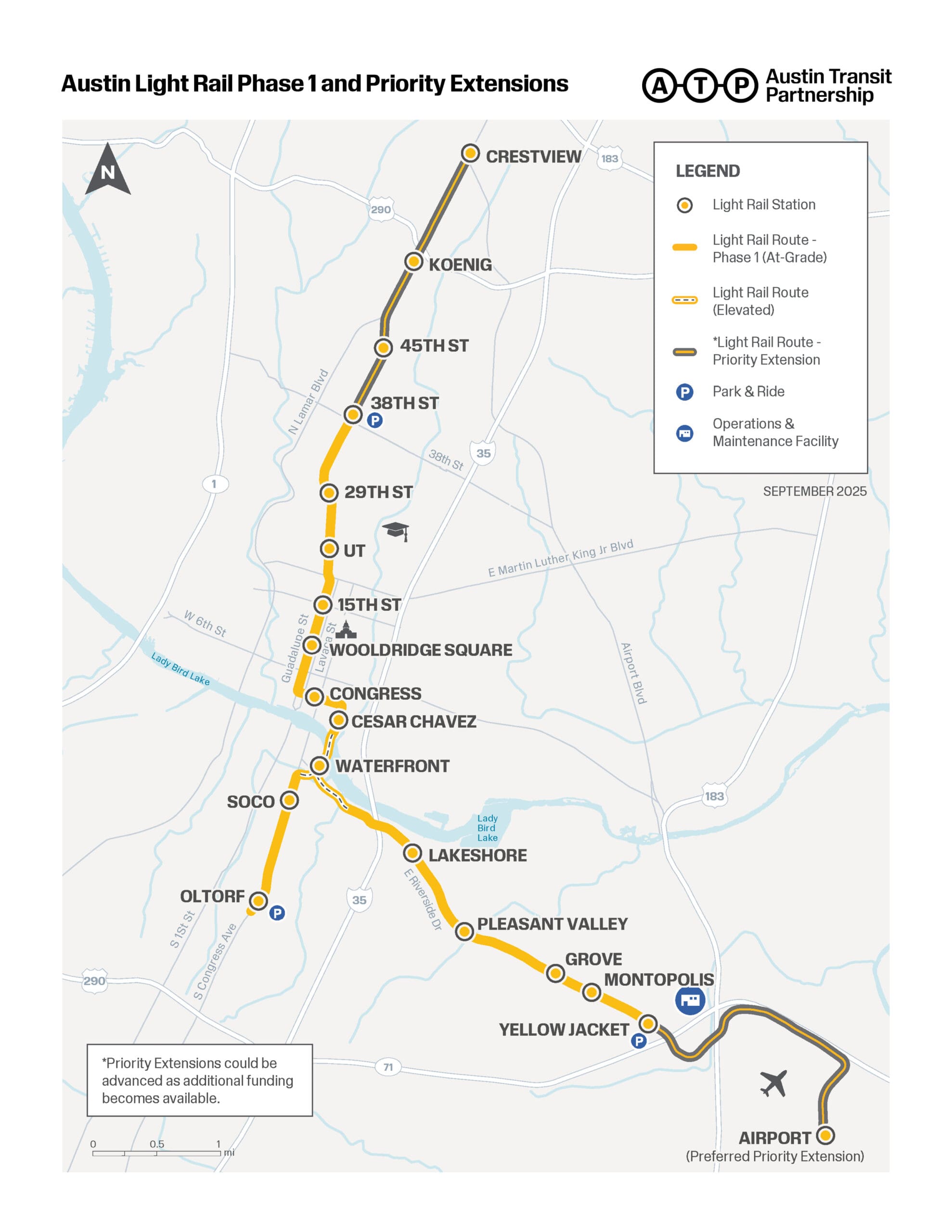
ATP has called the airport and Crestview "priority extensions." Ideally that means that they're going to work like hell to get those built well before the next major phase, but the more likely outcome is that the Phase 1 extensions will eventually be rebranded as Phase 2, only to be built following an extremely cumbersome and expensive process in the 2040's.
I hope my cynicism is proven wrong.
If you found this article particularly valuable but you’re not ready to become a paying member, you can show your appreciation by buying me a cup of coffee to fuel further investigation and analysis of city politics.