The budget is here
And a quick explainer on Texas tax law.


Please enjoy the complimentary article below. And please consider becoming a paying subscriber to get all four articles per week!
Well, I'm on vacation but the budget is out, so I can't just ignore that. Let's take a quick look at the highlights.
Although Mayor Kirk Watson made a point earlier this year of asking City Manager T.C. Broadnax to provide City Council with fiscal forecasts based on the "no-new-revenue" rate, we all knew that was a purely academic exercise. Broadnax has proposed and Council will almost certainly adopt a budget that raises property taxes by the maximum allowed under state law without voter approval: 3.5%.
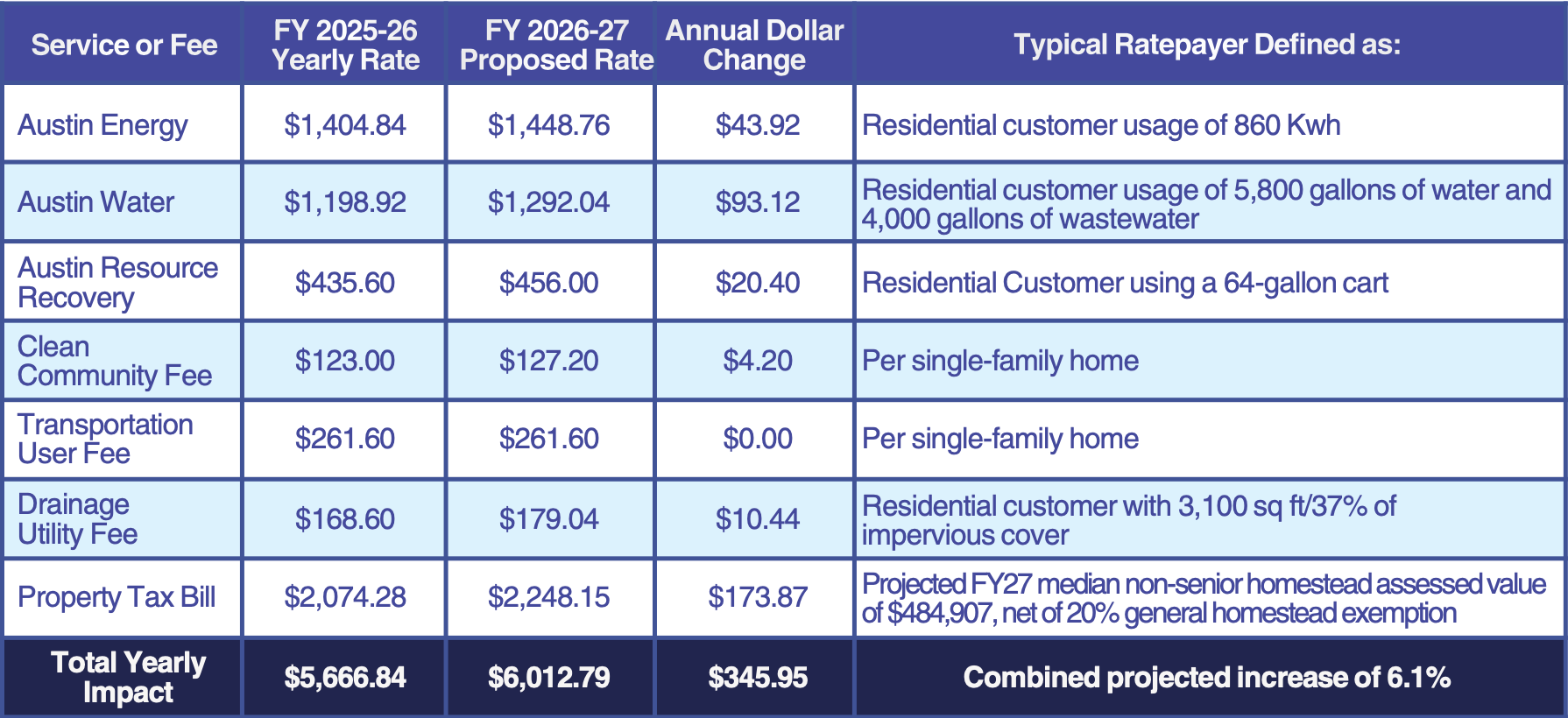
Here is the projected cost impact of the proposed budget for the owner of a $485,000 homestead.
Even with the 3.5% increase, this budget requires cuts. Broadnax has proposed $16.8 million in cuts to social service contracts largely aimed at homelessness. Some Council members have made clear they really want to find other ways to cut; we'll see if they succeed.
In a recent interview, Council Member Mike Siegel said he hoped to find savings by cutting or reducing existing consulting contracts.
"We have to make as much room as possible on social services given that the state and federal government aren't helping us out," he said.
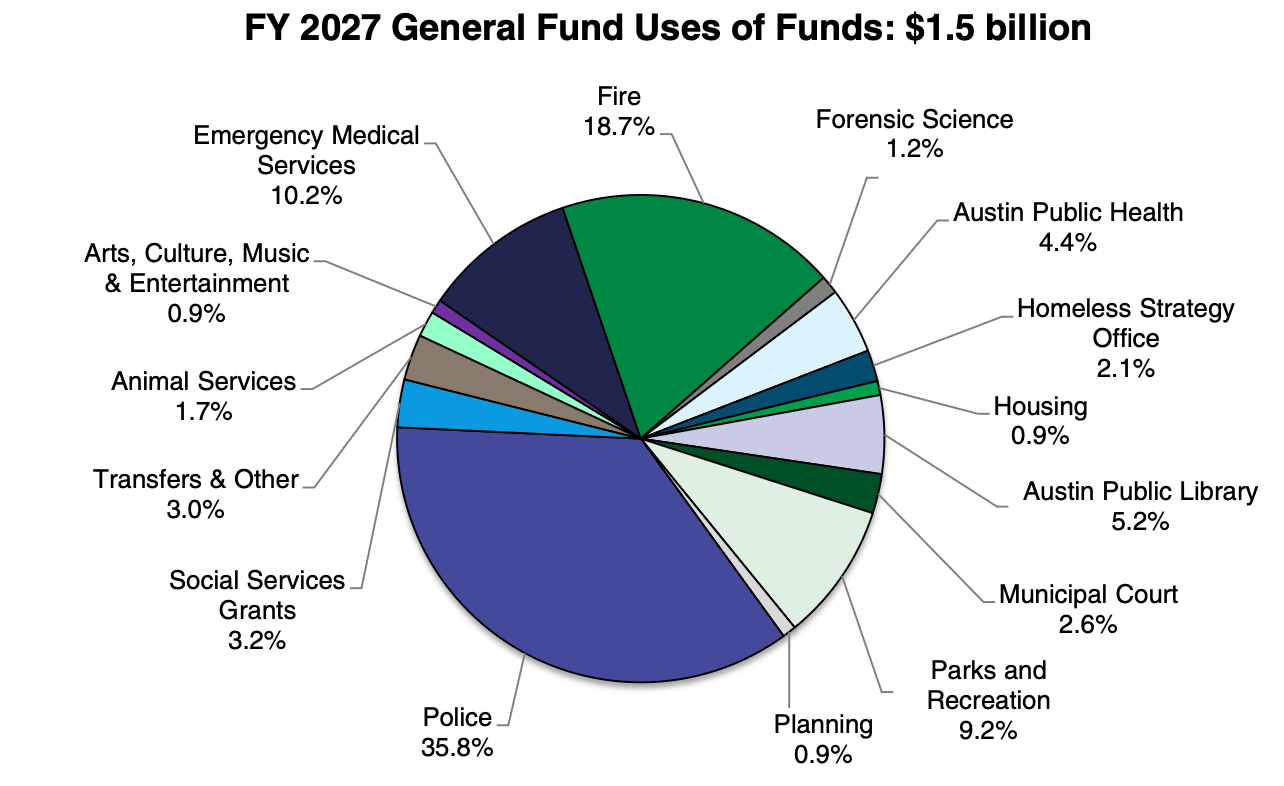
$6.6 billion vs $1.5 billion
The total budget really is $6.6 billion, but it's important to note that most of that is not funded by taxes. They are essentially city-owned businesses that are funded by service fees. The only parts that are funded by your taxes are the general fund and debt service.
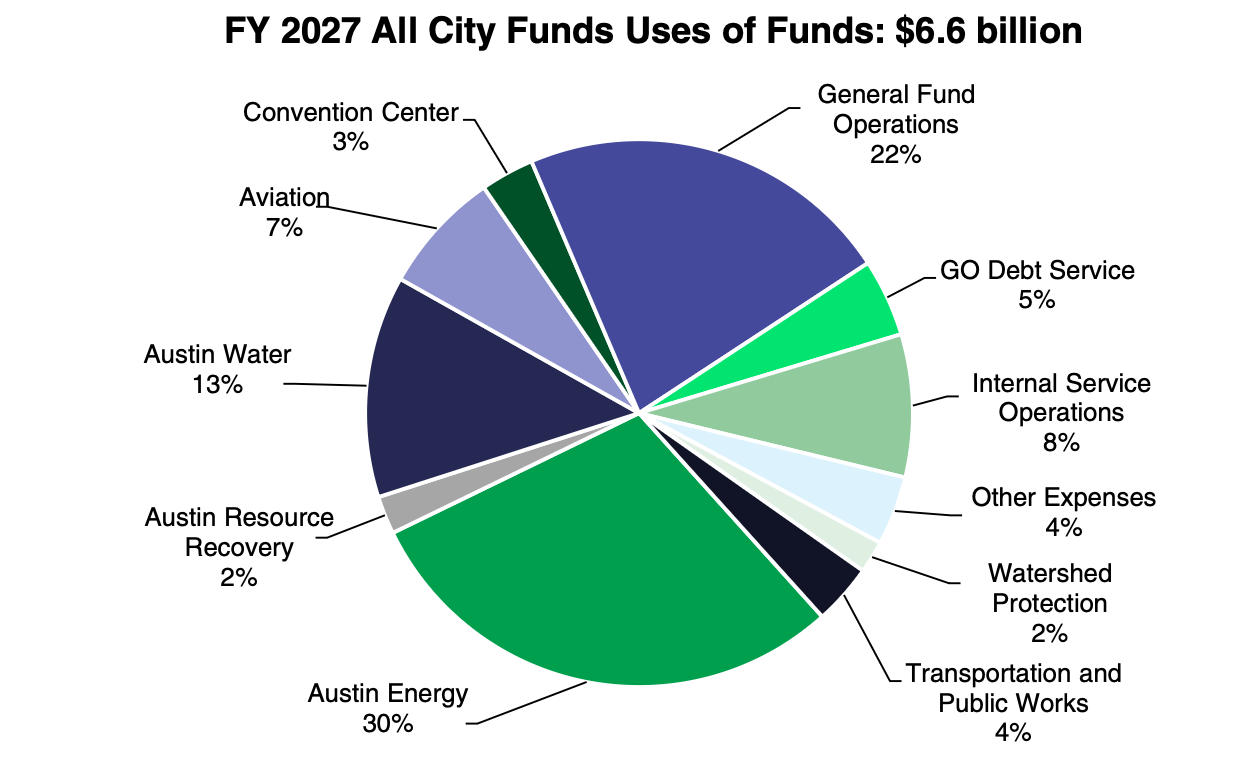
I make a point of highlighting this because people often deceptively argue that Austin spends way more than other similarly-sized cities by pointing out that its total budget is much larger. But in most other cities people are actually paying higher utility bills – just to a private entity rather than a public one.
The general fund is the stuff funded by property taxes and sales taxes.
A quick tax law explainer
The state restricts how much money the city can increase property taxes for the purpose of maintenance and operations on the same properties without voter approval. So if there were 100 properties in Austin, and the city raised $100 from them in taxes in Year 1 to fund city government operations, then in Year 2 the city would be allowed to collect $103.50 from those same properties.
However, the city can raise more than $103.50 in total if there is new development. So if two new homes were built in Year 2, then the city can tax them and get a couple extra bucks. This process repeats each year.
It's also important to note that this is only the maintenance & operations tax rate. There is a separate tax rate that funds debt service for capital projects. There is no limit on that, although most of that spending comes from voter-approved bonds.
Money from new development
The bulk of the general fund comes from property taxes that are subject to the state limits, but there are two other variable sources of revenue that fluctuate based on economic trends.
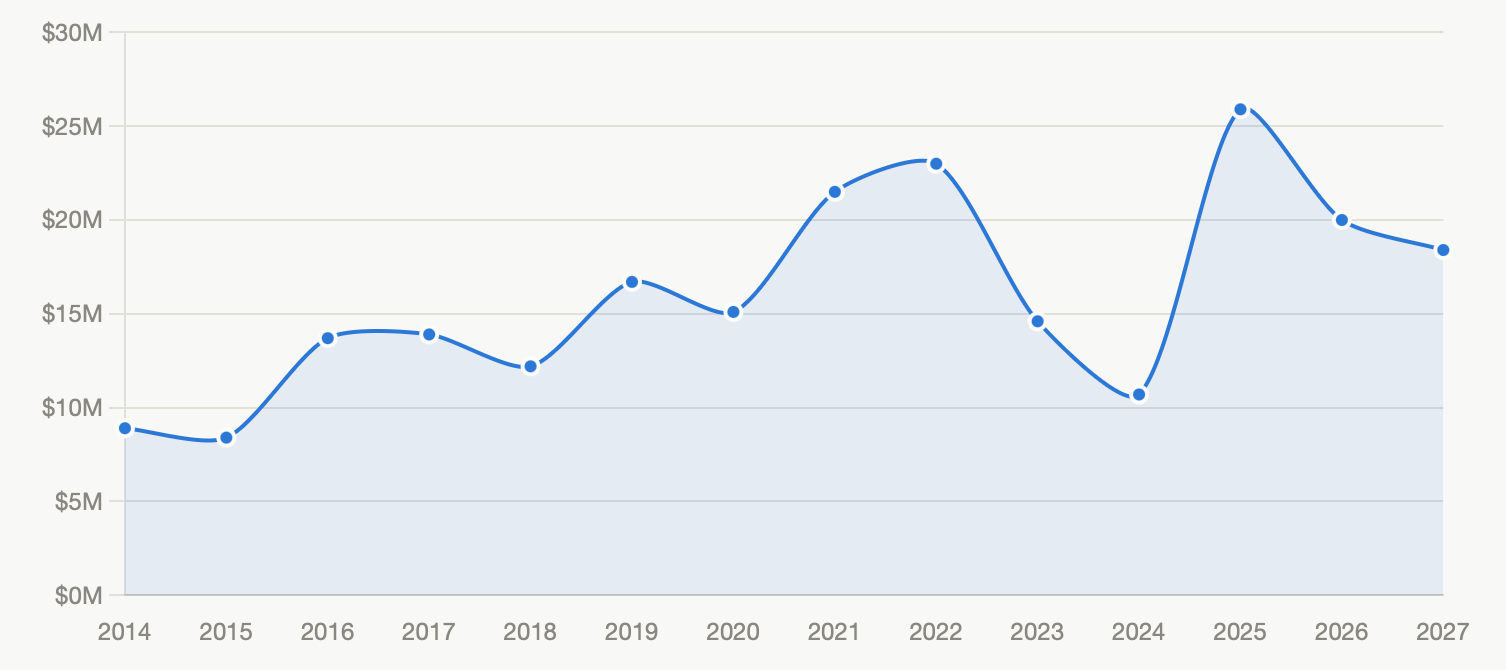
The first is property taxes tied to new development. This year's proposed budget raises $18.3 million from new development that is not subject to the 3.5% cap.
Unfortunately that figure is lower than the last two years, although it's not nearly as bad as the development slump that hit in 2023-24. The chart below (a Craver/Claude collab) shows the amount of tax revenue from new development in each city budget since FY 2013-14.
Sales tax
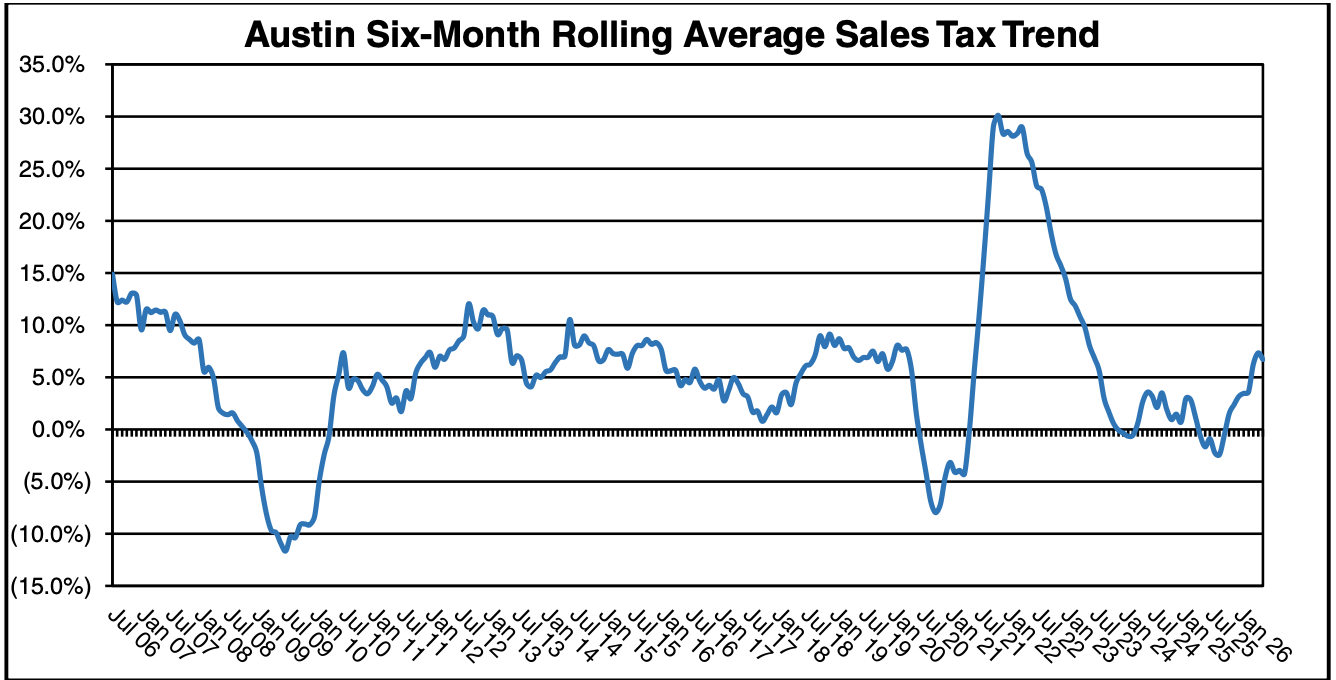
The other big variable revenue stream is the city's 1% sales tax, which is projected to generate $385 million this year.
The last couple years have been a bummer, especially after America's post-pandemic shopping spree in 2021-22.
Sales tax revenue only grew 0.4% in FY 2025, but the city now projects that it will be up 4.9% at the end of FY 26.
This is why enabling new development is so crucial to maintaining and/or enhancing city services. The cost of maintaining existing services, particularly compensation for police, is growing faster than 3.5% per year.
That's all I've got for today.
Please tell your friends to get their OWN subscription to the Austin Politics Newsletter! And if you found this article particularly valuable, you can show your appreciation by buying me a cup of coffee to fuel further investigation and analysis of city politics.