A new housing blueprint
The old one was always flawed.

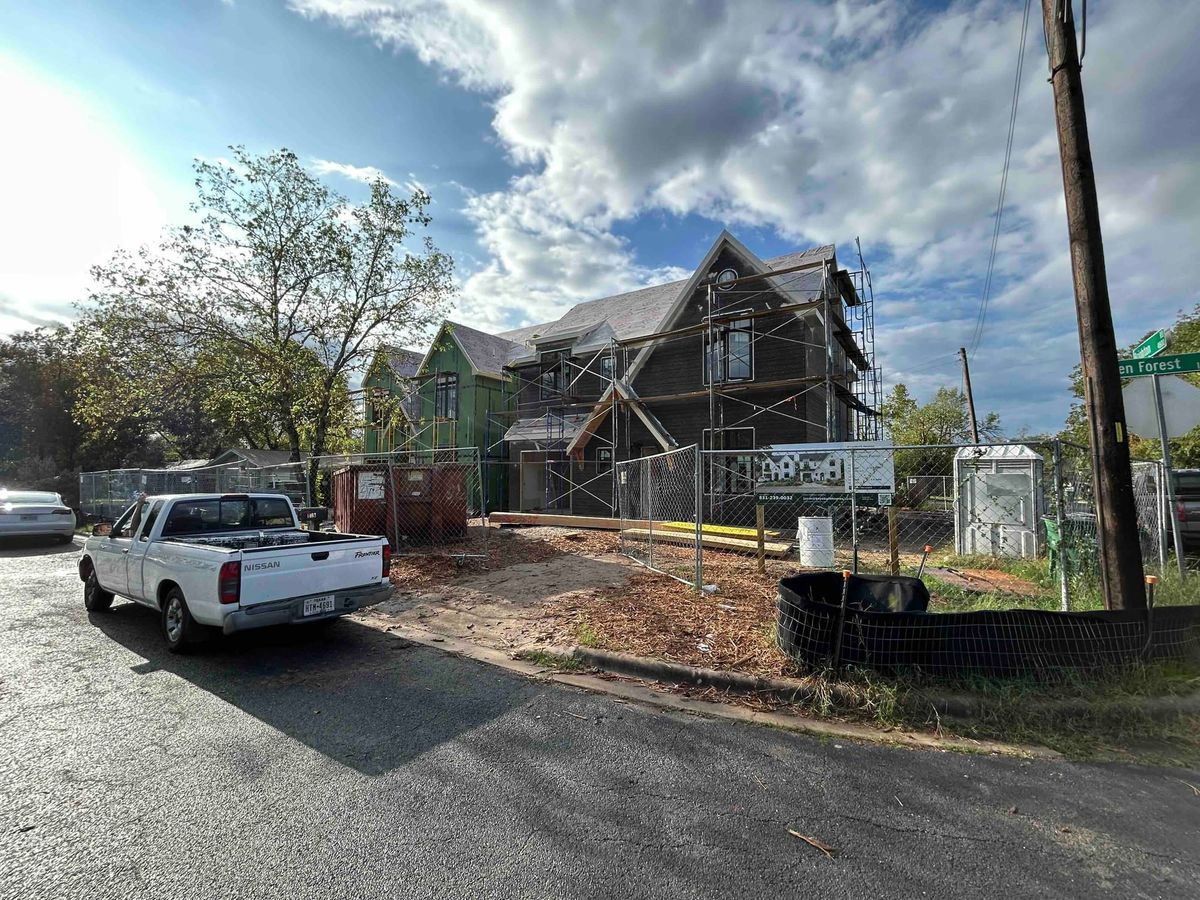
Last week's City Council meeting was pretty quiet, clocking in at just over an hour. Council did do something potentially important, however: they told the city manager to update the Strategic Housing Blueprint.
The blueprint, which was adopted way back in 2017, is not only outdated but was in some ways fatally flawed from the beginning. It's still very possible that the new iteration will repeat the mistakes of the last one.

I lost my Council seat in 2024. I kept the habit of reading all the staff memos. From Mackenzie covers City Hall, the Capitol, Austin history, and whatever else I can’t stop thinking about. Free, sourced, and occasionally funny.
The unanimously-approved resolution asks city housing staff to update the goals in response to changes in the housing market in recent years. The resolution noted, for instance, that the city has made "significant progress in expanding the affordable housing supply," but that more housing is needed for all income levels, particularly for those at or below 30 percent of the median family income.
The resolution asks for the update to provide data-informed insights and projections on how much and what kind of housing will be built and where it will be built in the coming years.
It also asks for "policy options" to increase funding for different forms of subsidized housing for low-income people and those trying to exit homelessness. Although the city can and likely will get voters to approve another housing bond in two years that will generate funding to build subsidized housing, Council members are also interested in finding money to provide direct assistance to people either at risk homelessness or exiting homelessness. The city's Affordable Housing Trust Fund played that role until it was zeroed out last year in response to the city's fiscal challenges.
Nearly three years ago I described my beef with the current blueprint:
The blueprint called for building 135,000 new units over the next decade. Where did that figure come from?
City staff simply looked at the city's current housing stock and the anticipated population growth (3.4%) in the Austin MSA.
I will give staff credit for using the MSA growth trend, rather than the city's growth trend. The MSA's growth includes a lot of people (it's impossible to know how many) who would like to live in the city but are settling in neighboring communities because of housing costs. So it is a better reflection of the total demand for housing in the city than the city's own population growth.
But the problem is that the base staff was operating from (397k units) was the heavily restricted housing market created by Austin's broken land development code.
Thus, instead of a plan aimed at addressing the shortage, we were given a plan to enshrine it. There was nothing bold about the 135,000 unit goal –– it was probably what we expected to be built under the existing conditions.
Hopefully the update includes some attempt to model demand that is not being met by housing supply. I'm not saying it's easy to come up with answers, but the study authors should contend with the fact that there are lot more people who would like to live in Austin than are living in Austin. Or, relatedly, would like to live on their own but are currently living with roommates or family.
Before passing the resolution, Council adopted an amendment offered by Marc Duchen that asked the blueprint to collect data on the number of "naturally occurring affordable housing" units that are "destroyed," including the specific number "destroyed" as part of a redevelopment that participated in a city density bonus program. (To use the word "destroy" in this context is unusual, but whatevs.)
It's fine to collect this data, but Chito Vela made a good point — not every demolition of an "affordable" unit is necessarily a tragedy. A lot of old housing is decrepit and unsafe.
The resolution calls on the update to be available soon enough to inform Council as it crafts a potential housing bond for 2028.
If you were forwarded this email, please consider getting your own subscription to the Austin Politics Newsletter!