Lingering questions about Brackenridge
How high can UT go?

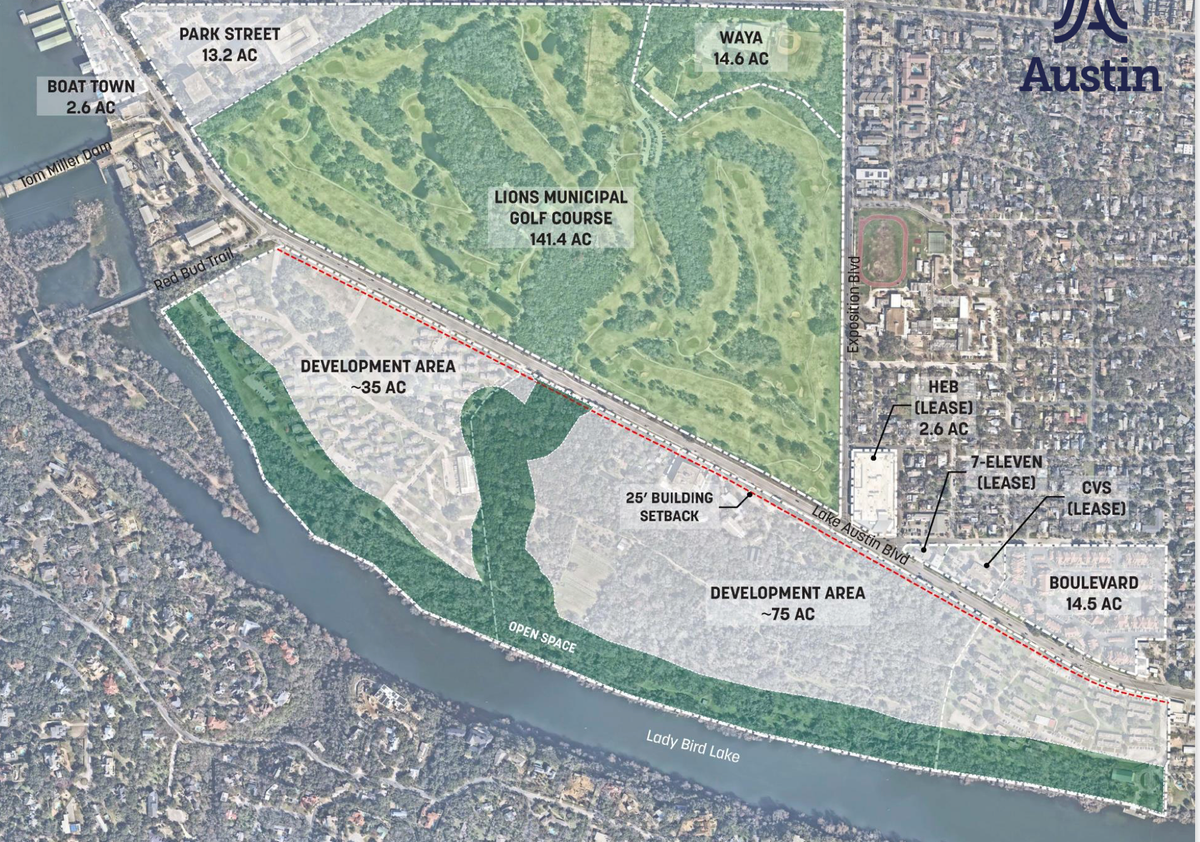
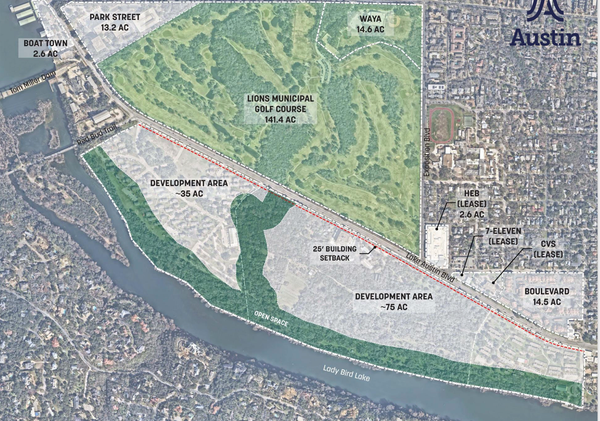
Mayor Kirk Watson is pushing for City Council to quickly finalize a deal with the University of Texas to enable the preservation of Lions Municipal Golf Course and the development of the rest of the Brackenridge Tract fronting Lady Bird Lake.
There appears to be appetite on City Council for making changes to the deal that will be good for the city, good for the university but could very well piss off neighbors of the property.
Today's sponsor:
I lost my Council seat in 2024. I kept the habit of reading all the staff memos. From Mackenzie covers City Hall, the Capitol, Austin history, and whatever else I can’t stop thinking about. Free, sourced, and occasionally funny.
Last Tuesday Council heard hours of testimony, largely from students and faculty pleading for the protection of the Brackenridge Field Lab. A number of scientists described being blindsided by news of the handshake deal between the city and the university that made no mention of the future of their beloved lab.
The university has offered vague statements about the future of the BFL, saying that it intends to "preserve portions of the [Brackenridge] tract for biodiversity research and education" but that it is adding other field labs around the state and will be "relying less on the existing Brackenridge site."
Is it odd that city officials have so little trust in the university safeguarding its own research infrastructure? Yes, but what do you expect after how the state GOP regime has forced the university to conform to its political agenda?
The city technically has no say in whether UT chooses to keep the lab, but the zoning it applies to the land could influence whether UT decides to redevelop it.
The most obvious way is to apply very restrictive zoning to the 82 acres of the tract that the lab sits on. You could zone it for parkland or "rural residential" or some other category that makes redevelopment unattractive and unprofitable.
However, the university is unlikely to accept the city sharply restricting its development rights on one portion of the tract unless it is allowed to more intensely develop the rest of the property. That is exactly what the Planning Commission recently recommended when it suggested scrapping the 65 ft height limit in the proposed deal.
Others on City Council appear friendly to the idea of building more intensely on the tract. The one person who appears to be urging caution on that front is Marc Duchen, who represents the area and is much more sensitive to the desires of Tarrytown residents than any of the rest of his colleagues on the dais.
In questions to city staff, Duchen, who is otherwise delighted by the deal to save Muny, expressed concerns about how much new traffic Lake Austin Blvd could accommodate.
The big question mark is the mayor, who kept quiet during the Tuesday meeting. Tarrytown are his people. They account for a disproportionate share of his votes and undoubtedly a very disproportionate share of his contributions.
But frankly, this shouldn't be hard. Tarrytown got its golf course. They should be able to accept some big buildings in exchange. If the lab is also to be preserved then the university should be allowed to develop the land to its full potential, maximizing the tax revenue to the city and increasing the amount of housing available in a part of town notoriously resistant to new housing.
The irony is that, according to Richard Suttle, lobbyist for UT, the level of density was the main issue the city and university were negotiating over. The university initially asked to be allowed to develop "north of 6 million square feet," on the tract but eventually agreed to settle for only 5 million.
Weird. Why should a cash-strapped city negotiate against its own financial interests? Whose view of the lake is being saved and how much tax revenue is being forfeited to pay for it?
I'd be curious to know how much floor space could be built if the BFL land is taken out of the equation. How high would the buildings need to go to achieve 5-6 million square feet of development?
Will the courts be OK with the TIRZ?
As part of the deal, the city has proposed creating a Tax Increment Reinvestment Zone to finance infrastructure on the tract. Basically, they're envisioning this tract becoming a new neighborhood and it needs streets, sidewalks and other basic stuff to support the tremendous increase in homes and commerce.
Director of Financial Services Kim Olivares is confident that this is an allowable use of TIRZ.
I've had enough bad experiences with city staff expressing confidence about their legal interpretation over the past decade to treat this claim with a grain of salt.
TIRZ was originally conceived as a tool to revive blighted areas that could not attract private investment without some help from the government. State law requires a city to show that the desired development could not occur but for the public investment.
In contrast to the Dog's Head property (largely a former gravel mine), the Brackenridge tract does not meet any reasonable definition of blight. It's some of the most valuable land in the city. Might it face the same fate as the proposed South Central Waterfront TIRZ, which was struck down in court for failing the "but for" test?
(For the record I'm fine with the use of TIRZ in areas that aren't blighted as long as the city has good reason it will come out ahead financially)
In a statement, the city rejected this comparison:
"The proposed TIRZ for the Brackenridge Tracts is more similar to the Mueller TIRZ – not the South Central Waterfront TIRZ – in that it is government-owned land that requires significant infrastructure to be developed."
I reached out to Bobby Levinski, an attorney with Save Our Springs, which successfully challenged that TIRZ. Levinski said he doesn't know whether they will take legal action but he is very skeptical of the city's legal arguments.
"It’s just getting pretty tiresome of the City Council consistently giving away taxpayers’ money with these rush agreements to support real estate interests that can afford to pay for their own infrastructure," he said.
It would certainly be cool if UT could help pick up the tab. It's got a lot more money than the city.
Check out my latest podcast episode: I talk with an expert studying the sports betting epidemic sweeping America. Watch on YouTube or listen on Spotify or Apple Podcasts!